
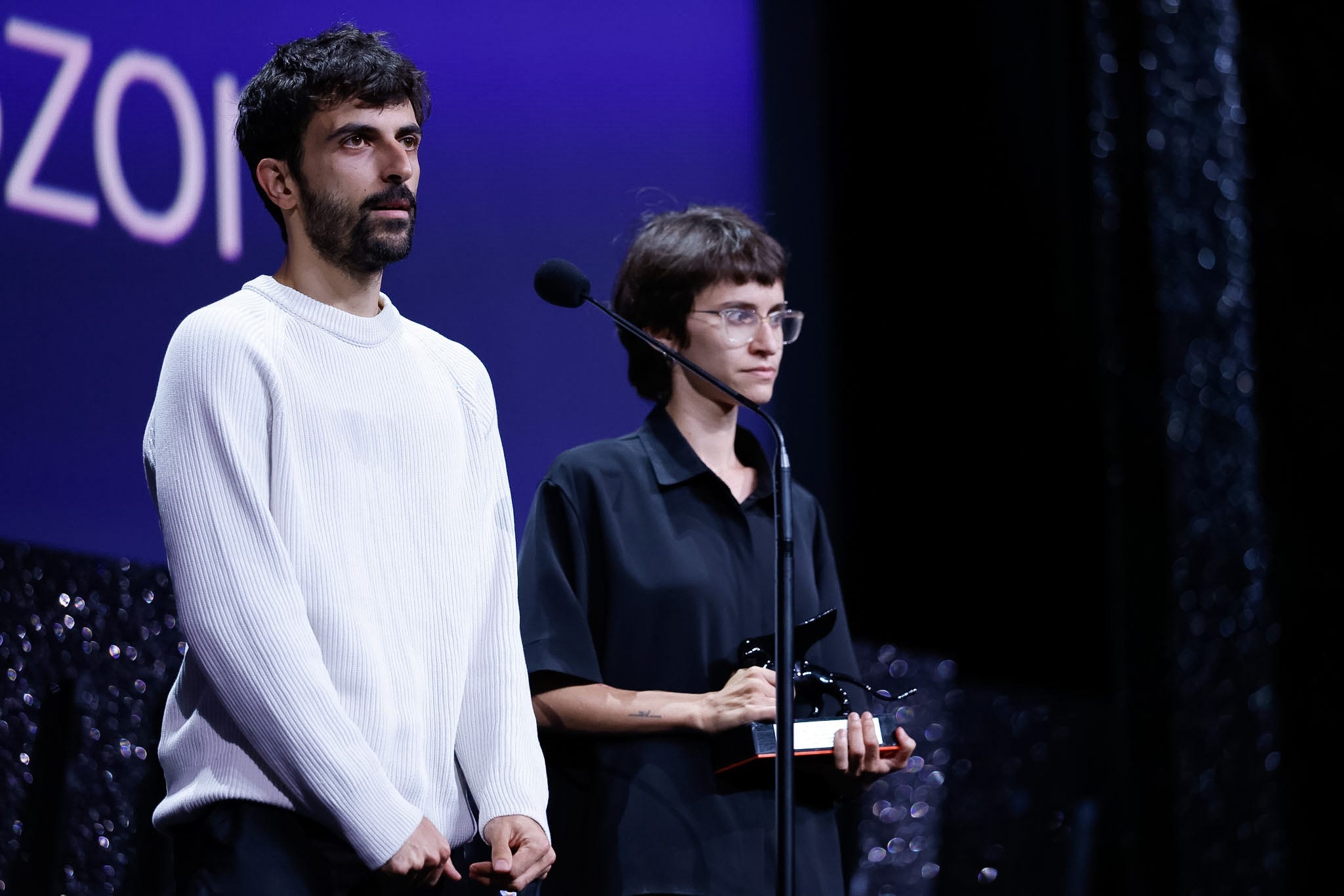
Yuval Abraham and Rachel Szor accept the Special Jury Prize at the Venice Film Festival. (@la_Biennale/X)
It’s Monday, September 14, and rather than the typical smiles and gratitude, self-important solemnity greeted attendees of the Venice Film Festival as Yuval Abraham and Rachel Szor accepted the Special Jury Prize for their new anti-Israel film NAZA. The title is the Hebrew military acronym for collateral damage, and the resemblance to another word is not one the filmmakers appear to have worked hard to avoid.
The critically acclaimed libel is the Israeli far left’s contribution to a steadily growing genre: anti-Israel propaganda, what might be called Hague bait. From the people who applauded the historical revisionist epic Palestine 36 and the directors behind the false frontier western No Other Land comes the sci-fi dystopia NAZA.
In the world of NAZA, Israel is Skynet, using AI to identify and eliminate threats in Gaza. Framed around the anonymous testimony of 24 people who claim to have served in intelligence Unit 8200, the film paints a picture of target lists generated from data scraped off thousands of hacked phones, and an interface where an officer clicks a rooftop and reads off how many people inside will die, with no column separating the infants from the adults. One interviewee recalls an approval for a strike with 500 expected civilian casualties.
The laziest provocation should be dismissed first. NAZA uses AI the way it is used on lazy grant applications and doctoral theses: a buzzword covering a lack of substance. AI in military applications is naturally unsettling to many, but let us be clear about what it is. A tool, one that has existed in earlier forms for nearly 20 years and is integrated into every modern military, and, in targeting and tracking, one that saves lives and improves military effectiveness. In the right hands, better data means fewer civilian casualties and more Hamas ones.
NAZA alleges that the IDF’s hands are soaked in blood, but let us break the claim down. Unit 8200 is the largest single unit in the IDF; finding 24 people to “confess” slivers of information, then arranging those slivers to look like an indictment, is not exactly a bulletproof case against the State of Israel. That they are anonymous, faces blurred and voices distorted, certainly makes the country look more malicious, but it also leaves open whether they served in the army at all, in what role, or whether they had any involvement in the events they describe. The self-identified junior soldiers would have no access to national or military strategy, and some of the accounts refer to situations outside Unit 8200’s role altogether.
Meanwhile, not even the Palestinian casualty claims record a single strike that killed 500 Gazans, and those figures have not been shy of inflation. Even in the strike that eliminated Muhammad Deif and a Hamas brigade commander, perhaps the strike that most “justifies” a high collateral damage estimate given the seniority of the targets, real-time reports from Gaza cited around 80 Gazans killed, with a retrospective breakdown revealing that dozens of them were Hamas members. Even taking the Hamas-run health ministry’s numbers, the civilian-to-combatant ratio is somewhere around 2:1. Not 500.
It is worth emphasizing that the rogue-AI allegation made in the film and in Abraham’s original 2023 piece does not allege that oversight was absent, only that it was cursory, a claim the IDF, other officers and the facts on the ground dispute. Documents released under freedom of information confirmed that the finger on the button has always been human, and that strikes remain subject to legal approval.
But this film was not a critique of the IDF’s proportionality judgments, nor a commentary on the use of AI in war. It wasn’t intended to “start a conversation,” as many filmmakers are fond of saying. It was libel intended to demonize Israel.
Abraham gestured at dialogue, telling the room it was important that Israelis watch the film, before making his purpose clear, widening the appeal to Germans and Americans whose governments, he said, are blocking pressure on Israel and funding the killing. We have heard this speech before. At the Oscars he managed a passing reference to the hostages, nothing at all about October 7, before calling for a boycott of the country.
But all you need to know about this film’s essence is the record-breaking standing ovation. Alexander Solzhenitsyn famously described a Moscow conference in 1937 where the applause for Stalin’s name ran on because no one dared be the first to sit. They managed 11 minutes. Few things testify to the power and intolerance of the ideology NAZA belongs to quite like the fact that Venice managed 25.
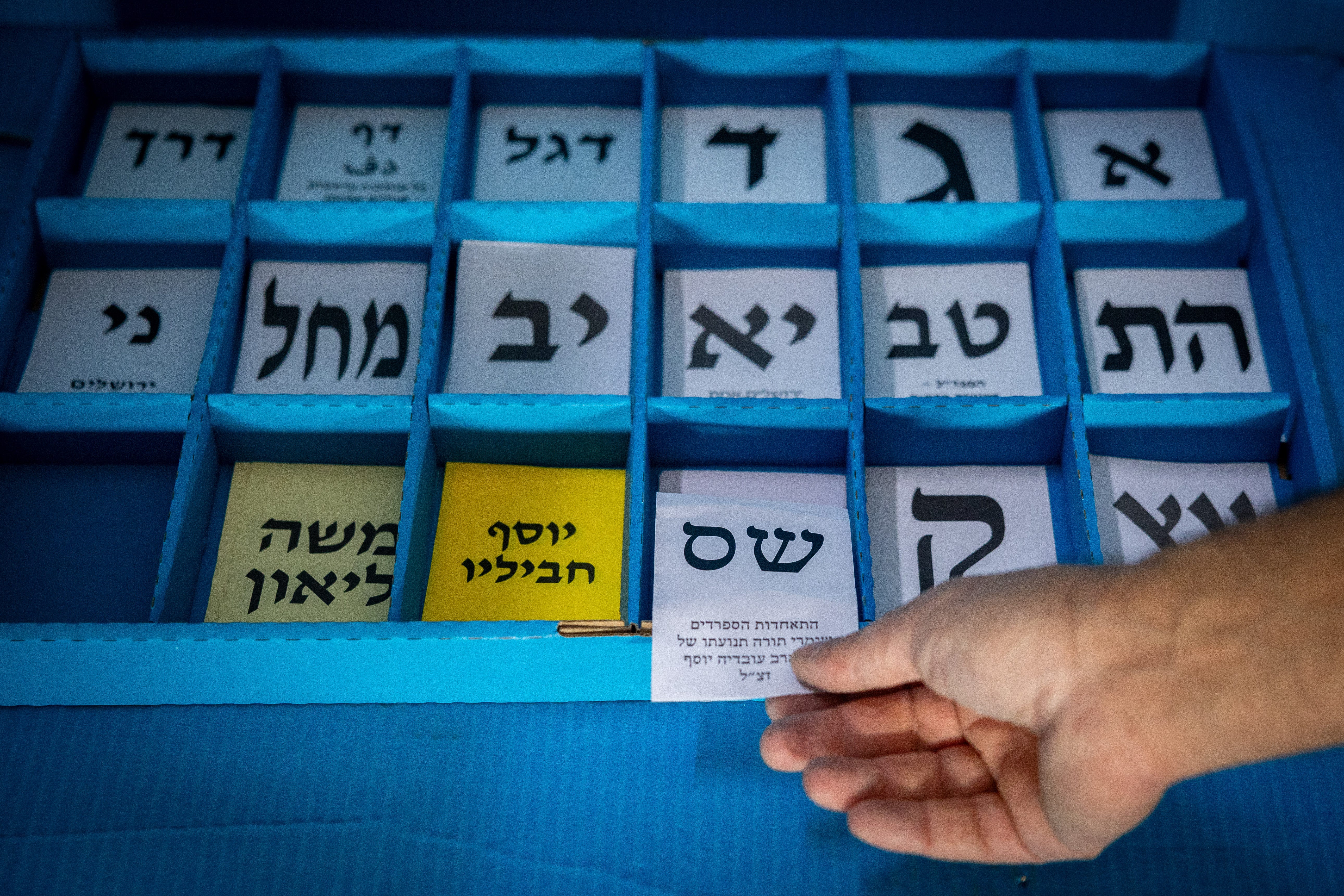
An Illustration of ballots ahead of the Jerusalem municipal elections, at a warehouse. (Yonatan Sindel/Flash90)
How nice to enter the new year on the comforting aromas of national consensus. Not, admittedly, about Netanyahu, or October 7, or the Haredi draft. A decisive majority of the public, across almost all its wings, believes there’s a high chance that the new year of 5787 will be a year of two election campaigns. This assumption is shared by most of the public, in a breakdown that cuts across sectors. In Likud, 60 percent rate it a medium-to-high probability; among “Yachad” voters, 64 percent; and Eisenkot’s voters are the most pessimistic of all, at 70 percent. As the saying goes—straight to the ballot box. Arabs, Haredim, Likudniks, leftists—everywhere, people assume another day o is in store this year.
And where, all the same, is there relative optimism that a government can actually be reached? Well, only 52 percent of Lieberman’s voters see the repeat-election scenario as one with high odds. They apparently believe Lieberman, who promises over and over that a government will be formed regardless—probably under him. And among the religious, only 43 percent fear a snap repeat election. We have no one to lean on—either Lieberman, or our Father in Heaven.
This is an excerpt from my weekly column in Israel Hayom.
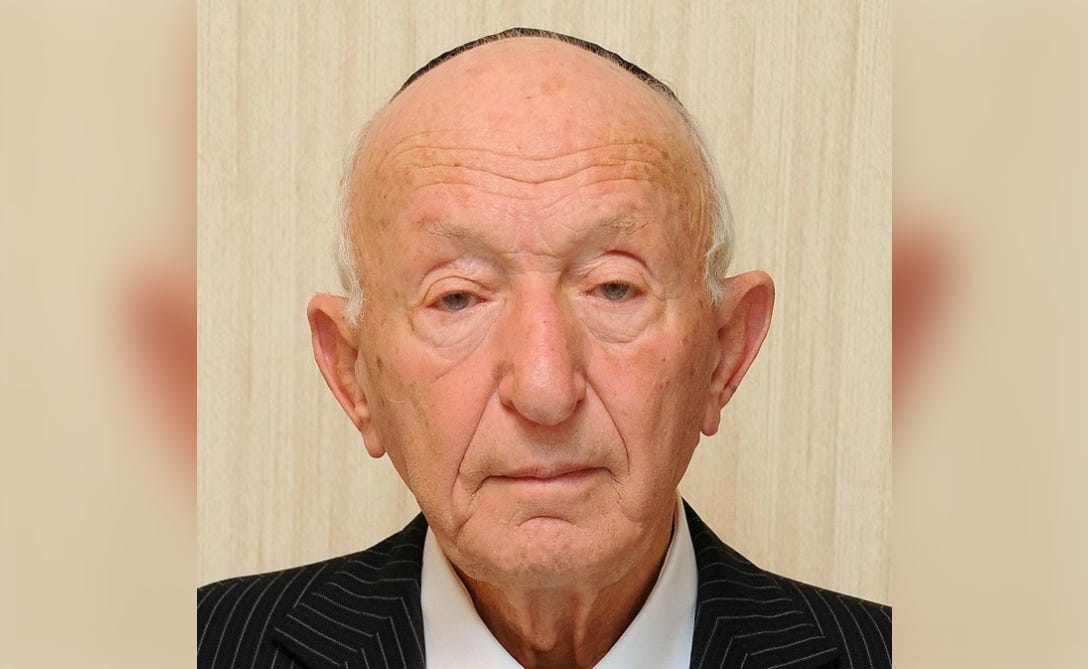
Yehuda Vidovsky (Yad Vashem)
Yehuda Vidavsky, believed to be the oldest Holocaust survivor living in Israel, died this week at the age of 107. A survivor of the Lodz ghetto, Auschwitz and a Gross-Rosen subcamp, Vidavsky lost almost his entire family in the space of a year, and then spent the last four decades of his life putting Polish Jewry’s cemeteries back together, stone by stone.
Born in 1919 and raised around Lodz, Poland, Yehuda was a young man when the war broke out. He and his family were among the Jews sealed into the Lodz ghetto, but the young man had anticipated what was coming and arranged accommodation inside the ghetto in advance for 15 members of his family. But as with all of the 210,000 Jews of the ghetto, they were eventually liquidated. On the final train, on August 29, 1944, they were deported to Auschwitz-Birkenau.
His parents were murdered in the crematoria on arrival, along with his older brother Gabriel. His younger brother Haim Moshe died in Buchenwald. His sister Yocheved was drowned at Stutthof. Only Yehuda and his brother Yehoshua passed Mengele’s selection. The two were sent to the Friedland labor camp, a Gross-Rosen subcamp, where they assembled aircraft wings until the Red Army liberated them on May 9, 1945.
After the war, Vidavsky went back to Lodz, married a fellow ghetto survivor and rebuilt his textile business. While Israel was fighting for its independence, he helped move arms shipments out of Poland, and in 1950 the family immigrated to the young Jewish state.
Starting in the late 1970s, with Poland still under communist rule, Vidavsky began the work that defined the rest of his life. He traveled to Poland dozens of times, mapped the burial plots of those who died in the Lodz ghetto, and, with his friend Yosef Buchman, restored more than 7,000 headstones and raised memorials for roughly 7,000 of the dead. He continued the project for the remainder of his life.
His revenge on the Nazis, he once said, was that they lost, and that we have the State of Israel, that we are free and strong and nobody can destroy us anymore.
He died peacefully on the first night of Rosh Hashanah, almost exactly 82 years after his parents were murdered, but not before seeing five generations of his family born in the state he held so dear.
English Editor: Ari Tatarka
If you enjoy the newsletter, you can show your support by becoming a paid subscriber—it really helps keep this going. I’m also offering a special monthly briefing for a small group of premium members. I’d love to have you join us—just click below to find out more.
Thanks for reading It’s Noon in Israel! Subscribe for free to receive new posts and support my work.


The juxtaposition of the obscenity of NAZA with the humble heroism and resilience of Yehuda Vidovsky is like the sound of the shofer waking me from my slumber in a call to action. Mr. Vidovsky was a true soldier of the Jewish people. No lies of the evil demonizers of Israel will erase us as long as tzadik’s like Yehuda call themselves to action in kedusha HaShem.