A Tale of Two Deals
Also, Likud primaries begin.
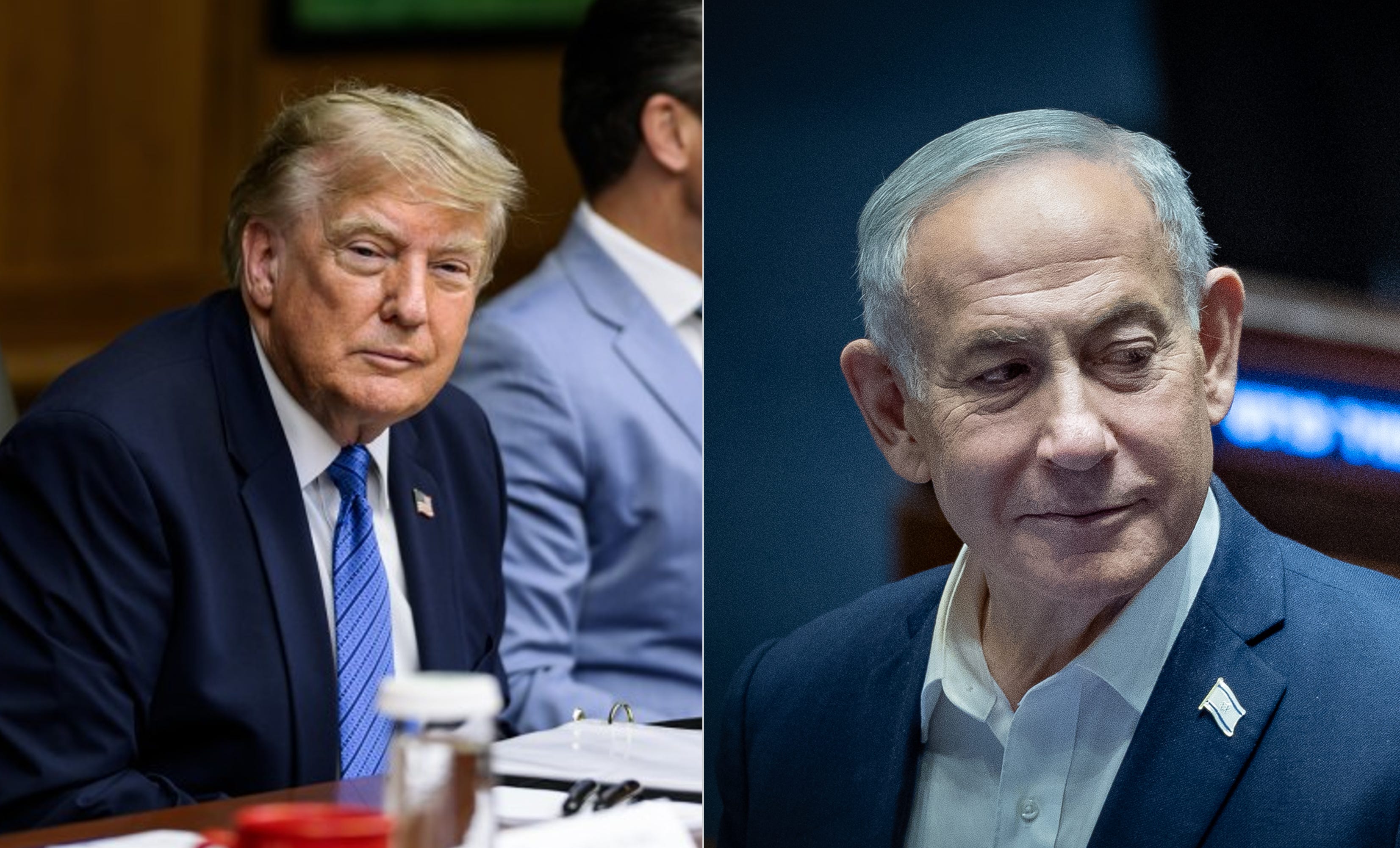
Donald Trump and Benjamin Netanyahu. (White House/Yonatan Sindel/Flash90)
It’s Tuesday, August 4, and “contrary to inaccurate reports, we note that the withdrawal of the IDF beyond the Yellow Line will take place only once decommissioning is complete, as Hamas committed to the mediators.” Israel appears to have won the battle of diplomacy in Gaza.
Last week, the Board of Peace spoke of the “full withdrawal of the IDF” during the process of disarmament. “This applies to light weapons, heavy weapons and the tunnels alike.” This morning the terms had moved. Senior officials said last night that “we will not withdraw under any circumstances before Hamas is disarmed,” insisting “this was not agreed to in the original Trump framework.” Their interpretation prevailed, and the board removed the word “full” from Monday’s Board of Peace statement minutes after it was published.
A real win, with a catch. The IDF isn’t on the Yellow Line—it’s well forward of it. Israel may have locked in that it won’t fully withdraw before disarmament is done, but the process still has to start somewhere, and starting it likely means ceding some ground.
Meanwhile, the other deal has radically diverging terms. Trump announced on Sunday that American and Iranian officials would meet to discuss reopening the Strait of Hormuz and the nuclear file. Within a day the choreography frayed. Iran’s negotiators had reportedly signed onto a Qatari-brokered scheme—inbound traffic through Iranian waters, outbound through Omani—and were awaiting the IRGC’s blessing. It hasn’t come. A senior figure in the IRGC ruled out a second corridor “under any circumstances,” and IRGC-affiliated media denied that same day that Iran had ever agreed to reopen the strait. The deal exists and doesn’t, depending on which Iranian you ask and on which day.
Gaza and the strait are entirely different theaters. But Gaza has the one thing the Iran front lacks: credibility. Israel said it would not withdraw under any circumstances until Hamas disarms, and the continuing strikes prove it means it. Trump, meanwhile, wanted to give Iran “one last chance before I cut their heads off”—and the heads remain firmly attached. This is his seventh or eighth last chance by now, and the whole threat seems to lift the moment the Saudis pick up the phone.
Likud party supporters arrive to cast their votes in the Likud primaries at a polling station in Ashdod on August 10, 2022. (Flash90)
While Abdul El-Sayed and Haley Stevens will face off in Michigan’s Democratic Senate primary, Likud’s primaries in Israel are heating up—and the two contests could hardly look less alike. Michigan is a one-on-one face off where only one can walk away; Likud is a battle royal: 36 candidates brawling and clawing over one another for roughly 16 realistic slots.
Take Defense Minister Israel Katz, doing his best Trump impression. On Sunday night, on Channel 14’s flagship show “The Patriots,” he announced live on air that he was removing Central Command chief Major General Avi Bluth. The offense: Bluth had pushed to renew an administrative restraining order against Tal Yinon Dardik, a settler accused of assaulting a Palestinian. Katz had opposed the order and told Bluth to drop it; when the general and the military prosecution fought to keep it, Katz went on television and replaced him—burnishing exactly the image sold by his new campaign video, an AI-generated number set to heavy rock and airstrike footage under the slogan “At last, a right-wing defense minister.” It blew up in his face. The army pointed out the chief of staff hadn’t even been told, the settlers came out in defense of Bluth, and within a day Katz was insisting he’d never announced a dismissal at all.
Then there’s Environmental Protection Minister Idit Silman, chasing populism of her own. Overriding her ministry’s legal adviser and the Nature and Parks Authority, she declared the Nile crocodile a “cultivated wild animal”—the bureaucratic sleight of hand needed to let the Prison Service ring Itamar Ben Gvir’s jails with crocodile-filled moats. The court ordered a pause to the plan, but she is forging forward. Truly a bold new reading of “environmental protection.”
And running her own insurgency is Israel’s answer to Marjorie Taylor Greene, Tally Gotliv. After much cajoling, Netanyahu secured a clause letting a committee—effectively him—set the entire list if the primaries have to be scrapped for security reasons. “Primaries are the glory of Likud,” Gotliv declared, vowing she might not run without them. That may be reason enough to start a war. Gotliv is one loose screw away from mimicking El-Sayed and blaming AIPAC.
The primary matters beyond the party. With the general election two months out, the crazier the list, the less enthused the voters, the lower the turnout. The primaries are less than two weeks away.
English Editor: Ari Tatarka
If you enjoy the newsletter, you can show your support by becoming a paid subscriber—it really helps keep this going. I’m also offering a special monthly briefing for a small group of premium members. I’d love to have you join us—just click below to find out more.
Thanks for reading It’s Noon in Israel! Subscribe for free to receive new posts and support my work.


A different view on Trump's approach to Iran: the blockade without active strikes is strangling Iran, as its former FM Mohammad Javad Zarif acknowledged in a recent article
https://www.israelhayom.com/2026/08/03/us-plan-to-tighten-the-noose-around-iran/
Maybe the similarity between the Iranian & Gaza theatres is that both contained an inherent contradiction that was essential to their execution, namely the language had to be sufficiently ambiguous for both parties to sign and claim as some sort of "victory". Presumably the hope was that with enough momentum, any obstacles could be ultimately overcome. Now, when the tide has gone out, were seeing the language in all its nakedness.