


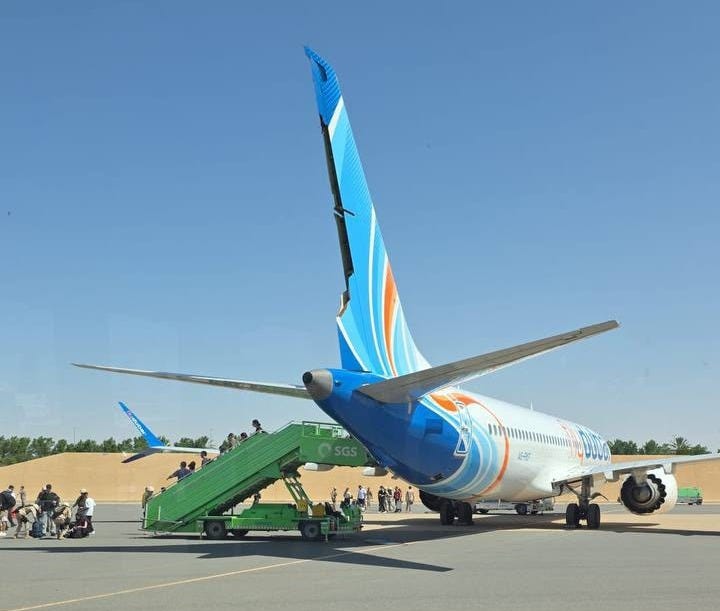
Flight FZ1073 safely on the ground in Saudi Arabia.
It’s Wednesday, September 30, and for the first time in over 20 years, someone has tried to hijack a plane bound for Israel. Miraculously, the attacker, an Omani pilot, was overpowered before he could complete his mission.
The entire region held its breath as the morning Flydubai flight from Dubai to Tel Aviv sent an emergency signal, flashed the hijack code and appeared to veer off course over Saudi airspace. The region then exhaled, almost with a chuckle, when early reports blamed a scuffle between the two pilots. That laughter quickly died as security assessments and passenger testimony revealed that the co-pilot had repeatedly stabbed the captain. The terrorist then seized the controls and pointed the plane toward the ground, dropping almost 20,000 feet in just over a minute, until several crew members and passengers forced their way through the cockpit door and subdued him. Many were injured in the process. The plane made an emergency landing in Tabuk, in northwestern Saudi Arabia, where the passengers are now waiting for Israel to bring them home.
The assailant’s specific motive and affiliation are still unconfirmed, but Israel is treating the incident as terrorism.
One of my favorite comedies of all time is “Airplane!,” but there’s a reason Israel doesn’t make comedies about crises in the air. Between 1968 and 1976, Palestinian groups attempted or carried out 16 hijackings, and roughly as many attacks on other aviation targets, hitting El Al offices and passengers at the airports in Athens, Brussels, Istanbul and Rome. An El Al jet flying the Israeli flag made an unmistakable national symbol. The defining image of the era was an isolated plane sitting on a foreign tarmac, its window shades drawn, surrounded by police and soldiers, while hostage negotiations dragged on for days. The aim was to isolate Israel, reach a global audience and strike fear into Israelis, and it succeeded on all three counts.
The era’s most dramatic hijacking, and effectively its last against Israel, came in 1976. Palestinian and German terrorists seized an Air France flight from Tel Aviv and landed it in Entebbe, under the protection of Ugandan dictator Idi Amin. The daring rescue that followed has been adapted into several films and has become a canonical moment in Israeli culture. In practical terms, it gave the West an alternative to capitulation, which it had been ignominiously practicing for years, and a credible threat of rescue made hijacking a far less attractive gamble.
But the biggest factor in ending the scourge was also the most mundane. After the 1972 massacre at Lod Airport, in which 26 people were killed, the Shin Bet turned Israel’s international airport into a fortress, with metal detectors, X-ray machines, surveillance cameras, a pressure chamber for checked luggage, a vehicle checkpoint at the entrance and armed guards. Israeli standards soon became the global norm, and terrorists came to realize that the risk involved in hijacking planes was greater than the chances of success. At least where Israel was concerned, they gave up the method altogether.
Footage of the injured pilot.
Today’s attack was an unwelcome reminder of that dark era. Thankfully, it had a happy ending, and notably it came just weeks after the 25th anniversary of the deadliest hijacking in history.
Many questions remain. How was this man cleared to fly the plane? What precisely drove him? And what does this mean for the future of air travel in Israel’s busiest flight corridor?
El Al suspended its scheduled flights to the United Arab Emirates in March 2026 due to security threats and has not resumed them since. It is possible that the assailant intended to drive a wedge into this crucial alliance. Just yesterday, Benjamin Netanyahu warned in a speech at the IDF’s main air base that “our enemies will try to attack us.” “Don’t mess with us,” he warned. “Our long arm will reach you anywhere, and at any time.”
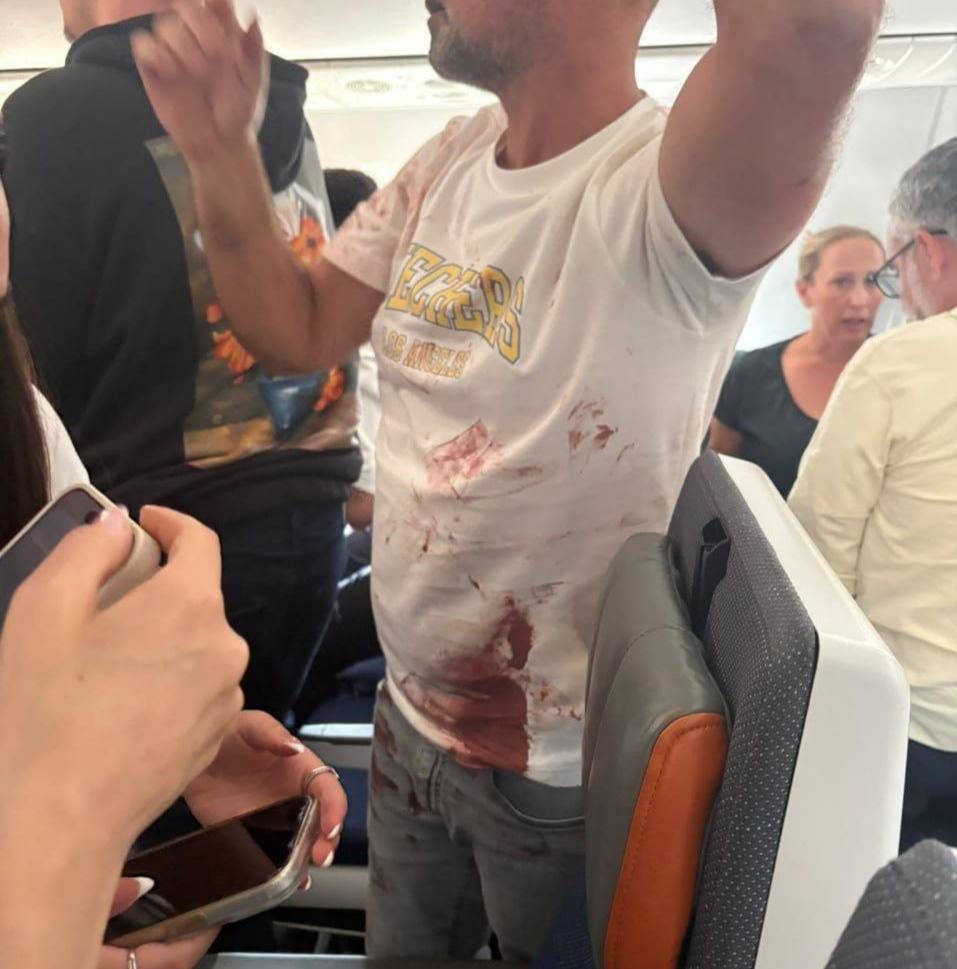
Blood stains cover one of the passengers who subdued the terrorist.
But it was not the avenging fist of the Israeli Air Force nor a heroic rescue by special forces that foiled today’s threat. It was the courage of everyday Israelis. There was a very real and tragic possibility that I would be writing an entirely different article today. With the captain barely hanging on to life, a broken steering system and a damaged wing, it was only by the bravery of a handful of passengers and crew that almost 180 lives were saved. Today, on the fifth day of Sukkot, we will recite the words of Hallel with extra fervor: “This is the day the Lord has made; let us rejoice and be glad in it.”
English Editor: Ari Tatarka
If you enjoy the newsletter, you can show your support by becoming a paid subscriber—it really helps keep this going. I’m also offering a special monthly briefing for a small group of premium members. I’d love to have you join us—just click below to find out more.
Thanks for reading It’s Noon in Israel! Subscribe for free to receive new posts and support my work.


Even now, almost an hour after you have released the story The New York Times still can’t figure out the motive for the apparent “tiff” between two pilots. Here is their take from 7:44 AM.
Live Updates: Flight to Israel Is Diverted After Pilots Clash in Cockpit
Passengers intervened after the pilot and co-pilot fought during a flight from Dubai to Tel Aviv, forcing the plane to make an emergency landing in Saudi Arabia. It was not clear what had prompted the clash.
So who landed the plane?