No Man Left Behind?
Also, who is Netanyahu's competition? A Khamenei-less Iran, and more.
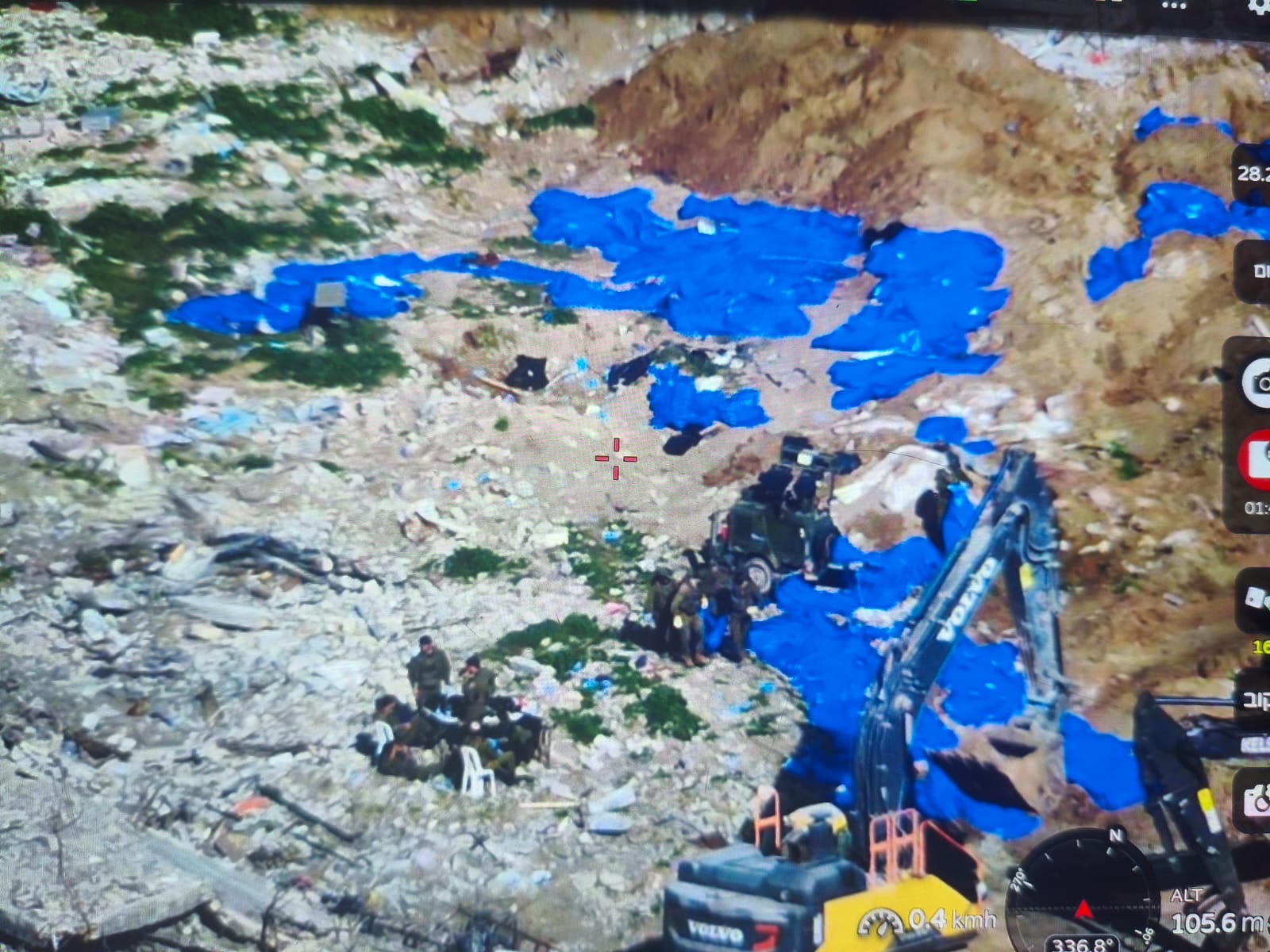
IDF searching for the body of Ran Gvili in a cemetery in Northern Gaza, blue sheets covering unearthed bodies.
It’s Monday, January 26, and last night, the IDF launched Operation Brave Heart to recover the remains of Israel’s last hostage, Ran Gvili. Whether or not the operation will be successful, the Americans aren’t waiting—the next phase will begin.
A quick reminder:
Ran Gvili, a 24-year-old police officer, rushed south to help on the morning of October 7. He fell while protecting his comrades during an engagement with Hamas terrorists at Kibbutz Alumim, Brave Heart indeed. He has been held in Gaza for 843 days.
Where is Ran?
That’s the question Israel has been asking for months. The IDF believes he may have been wrongfully buried under a Muslim name in a cemetery in northern Gaza. Heavy equipment and police forensic teams are now working to identify bodies in the graveyard. Galei Tzahal’s Doron Kadosh reported this morning that more than 200 graves have been opened so far as part of the search.
Digging up graves is a deeply traumatic experience for all involved. The IDF is offering psychological support to all soldiers participating in the operation, and I can’t imagine it is easy for Gazans whose family members are being unearthed.
All of this could have been avoided if a certain terrorist organization that murdered and kidnapped Ran had returned him, as it was required to do.
Well—maybe not required to?
The new line the Prime Minister’s Office is using is that the next stage of the plan was conditioned on the return of all living hostages and a “one hundred percent effort by Hamas to locate and return all deceased hostages.” It seems Israel is moving to the next stage. So, did Hamas put in one hundred percent effort? Not even close.
Hamas dragged its feet for months in searching for Ran. It did not pass on to Israel the information it had in its possession. The military operation currently underway is based on Israeli intelligence—not Hamas’s.
What is this next stage?
That would be the reopening of the Rafah Crossing to civilians. Israel does not want to do this without Ran, but the Americans are less patient.
Yesterday, I spoke to an informed American source following the meetings between Steve Witkoff and Jared Kushner with Prime Minister Benjamin Netanyahu. He insisted that there wasn’t even “an inch of difference regarding Iran.” When it comes to Gaza, I imagine it’s closer to a yard.
Kushner and Witkoff want progress—and that comes at the cost of corners being cut.
Rafah was the first concession. Will more follow?
Heavy equipment entering Gaza today.
Yashar! Chairman Gadi Eisenkot, Yesh Atid leader Yair Lapid and Bennet 2026 head Naftali Bennett. (knesset.gov)
The betting site Polymarket is not particularly impressed by most of the polls published in Israel. When the line opened on the identity of the prime minister after the 2026 elections, Naftali Bennett led. But within days, the trend reversed. For two months now, Netanyahu has been confidently in front. This week, he widened the gap: a 54 percent chance of being prime minister. Bennett stands at 19 percent—a significant drop from last week—followed, in order, by Gadi Eisenkot, Yair Lapid, and Yair Golan, all in single digits.
Of course, it should be noted that the “Netanyahu” option also includes the possibility that he remains in office as head of a caretaker government. Still, this is completely different from the impression created by polls over the past two years.
What is going on here?
Is it the dynamic that should worry the opposition: Netanyahu versus the opposition—and the opposition versus itself?
Gadi Eisenkot’s move last week—to propose a united list with Bennett and Lapid—was intended to end the destructive descent into internal battles. In the right-wing bloc, it is clear who leads and what the structure is. A giant list, with Avigdor Lieberman on its right and Golan on its left, would end the leadership brawls in one stroke and neutralize the “prisoner’s dilemma,” in which each player acts rationally for himself and the shared goal is gravely harmed.
Bennett has long warned that an alliance with Lapid would severely damage his chances of drawing votes from the right, but Eisenkot’s camp believes that, in any case, the only person capable of doing that is Lieberman. They think a party with two prime ministers and a chief of staff should allay the fears of undecided voters.
One more thing can be learned from the episode: Gadi Eisenkot has not abandoned his intention to lead the bloc. If Bennett refuses the proposal to choose the prime ministerial candidate only close to the elections, will that pave Eisenkot’s way to say, “I tried, they didn’t want to—I’m running alone”? Or perhaps to run with Yair Lapid, who is willing to discuss vacating the top spot under certain conditions?
The chances of the unification Bennett wants so badly—with Eisenkot—declined this week. Bennett wants straight and right. Eisenkot wants to meet in the center.
This is an excerpt from my weekly column in Israel Hayom.
Supreme Leader Ayatollah Ali Khamenei. (Leader.ir)
Imagine an Islamic Republic without Ayatollah Ali Khamenei. The Trump administration certainly is. Would it be chaos, democracy, or something else?
My guess? Not radically different.
Trump may be thinking of pulling another Venezuela—decapitating the dictator that’s what the Iranian assume. Yesterday, it was reported that the Supreme Leader is being stowed in a bunker under Tehran in anticipation of a U.S. strike.
According to Iran International, Masoud Khamenei, the ayatollah’s third son, has taken over the day-to-day responsibilities of being Supreme Leader and is now serving as the primary communication channel for the regime. But the Islamic Republic was meant to replace the Iranian monarchy. The son is not the father—and would not be able to stand atop a weakened regime.
So here are some options:
Khamenei is killed, and nothing changes. The regime persists in its current form, a new cleric is nominated, and things continue as usual. This is unlikely.
Khamenei is taken out along with the IRGC top brass. Protesters return to the streets, and with quiescence from the remaining IRGC and defections from the Iranian Army, Iran returns to democracy. Also unlikely.
Trump decapitates the snake. The Islamic Revolutionary Guard Corps survives the transition, sheds its clerical skin, and reemerges as a Persian nationalist dictatorship—potentially welcoming the crown prince as a symbolic figure while maintaining real power behind the scenes. More likely.
The possible successors to Khamenei are unlikely to be equally committed to—or capable of—spreading terror and instability in the region. The Trump administration may be able to force a new, weaker regime and an end to the nuclear and ballistic missile programs. That may be the plan—much like in Venezuela: allow remnants of the previous regime to remain that will concede to American demands. But just because the future of the Islamic Republic is pitch black does not mean the future of Iran is bright.
Everything will depend on those vital days and weeks that follow an American strike.
Chart from Yedidiah Plescov. (@YedidiahPlescov/X)
If it were January 2024 and you had cash to place—into the flagship AI darling OpenAI or into the stock market of a country mired in a grinding urban war—which would you choose? Bill Ackman chose the latter, and it made him even wealthier.
In January 2024, the American billionaire bought 4.9 percent of the Tel Aviv Stock Exchange for $25 million. Had he put that money into OpenAI at comparable private-market valuations, he might be sitting on a tidy ~$120 million today—about a 4.8× return.
But because he bet on Israel, that $25 million stake is now worth roughly $135 million—about a 5.4× return.
Israel beat OpenAI—while fighting a war and while the Silicon Valley company was enjoying an AI bubble.
All this happened even after foreign investors pulled billions from Israeli markets at the end of 2023. Just proves what the last few years have made so clear: always bet on Israel.
If you enjoy the newsletter, you can show your support by becoming a paid subscriber—it really helps keep this going. I’m also offering a special monthly briefing for a small group of premium members. I’d love to have you join us—just click below to find out more.


Bill ackmen is smart
How anyone can consider Eisenkot a candidate escapes me.The high brass of the IDF pre 10/7 believed in mowing the grass in Gaza ststic defense high tech a fence and a smaller smarter IDF all of which which proved disastrous on 10/7