Operation Roaring Lion Day 16: Target: Kharg Island
Also, Israel struggles to return to normality, Knesset intrigue continues, and more.
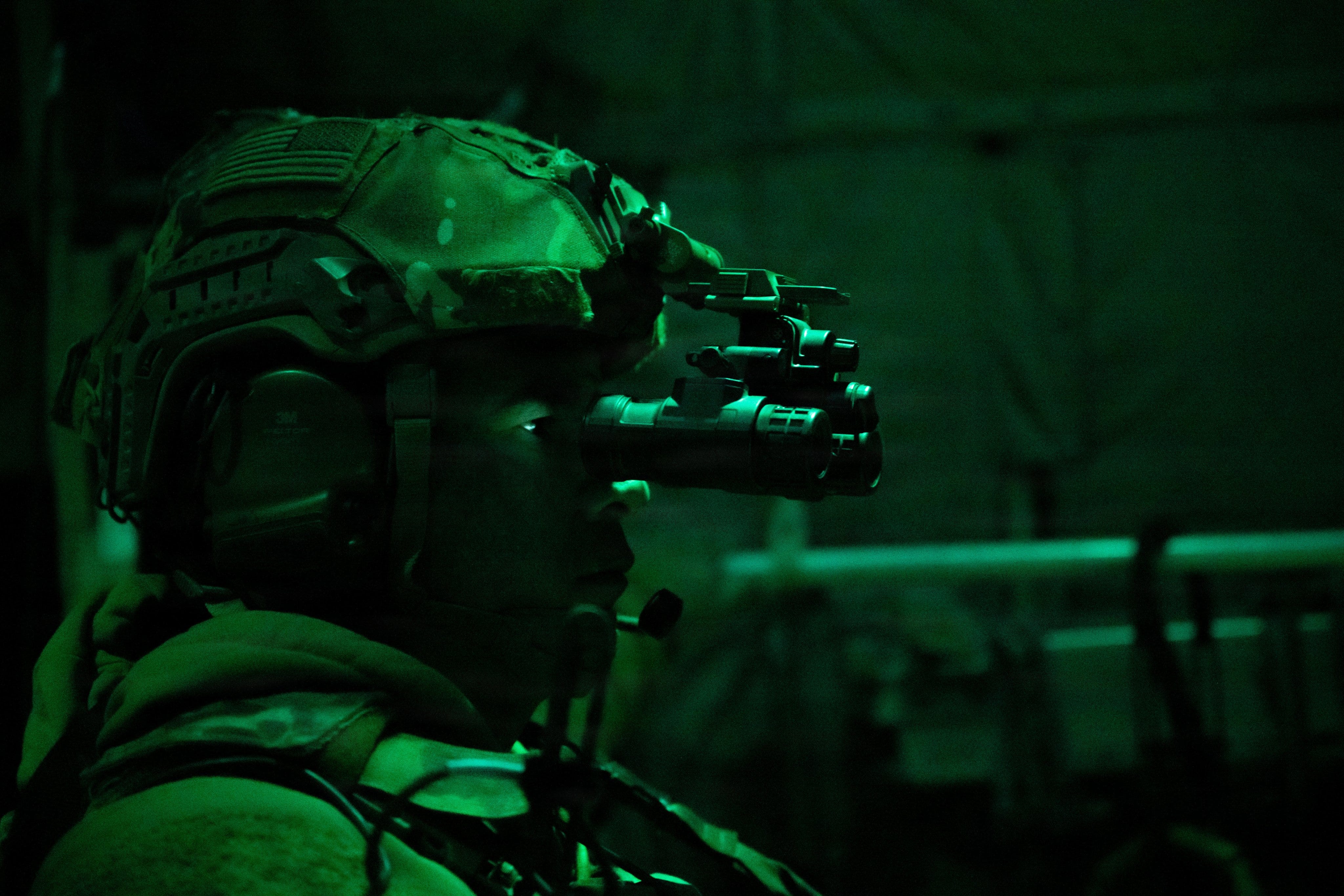
U.S. Air Force C-130 pilots deliver supplies to warfighters throughout the Middle East. (CENTOM/X)
It’s Sunday, March 15, and the sixteenth day of Operation Roaring Lion. Here are the latest developments while you were asleep:
The United States struck Iranian military infrastructure on Kharg Island on Friday, destroying naval mine storage facilities, missile depots, and other military sites. The island is a critical node in Iran's oil export network, processing roughly 90 percent of the country's crude exports. The strikes come alongside reports of additional U.S. Marines and warships being deployed to the region.
According to the well-informed media outlet Semafor, Israel has told the United States that its stocks of ballistic missile interceptors are running low. I cannot confirm this report, but what is clear is that Israel’s interceptor stock has been performing significantly better than during Operation Rising Lion. The total number of ballistic missiles launched at Israel has been considerably lower than in the previous operation, and Israel has increasingly used alternatives to the more expensive Arrow interception system where possible.
Despite mediation efforts by Oman and Egypt, neither side appears willing to negotiate. Officials from both countries confirmed on Friday that talks remain off the table for now. Iran is betting it can outlast American pressure, while the United States is betting it can make that strategy untenable.
Iranian missile launches are declining, and schools are beginning to reopen in some areas of the country. Further-flung areas—including the Jordan Valley, Judea and Samaria, and the Negev—will return to in-person classes tomorrow, while most families in central Israel continue learning online. In an ironic twist, the Gaza Envelope is for once among the areas least exposed to rocket fire, its schools will reopen tomorrow.
(littlemoiz.com)
Now, on to the details.
Footage from the U.S. strike on Kharg Island. (CENTCOM)
Since the beginning of the war, a sword has hung over the regime’s head. The sword in question is nugget-shaped, roughly eight square miles, and located in the northern Persian Gulf: Kharg Island.
The unassuming coral outcrop hosts facilities that process upwards of 90 percent of Iran’s oil exports—roughly a fifth of Iranian GDP. If this peculiarly shaped sword falls into U.S. hands, it could sever the regime’s vital financial lifeline.
On Friday, the United States made its first move, carrying out around 90 strikes on military facilities on the island while leaving the oil infrastructure untouched. Simultaneously, a Marine expeditionary unit—precisely the kind suited to conquering an island—began moving toward the region.
Trump now faces a strategic choice. He could use the threat of invasion as a bargaining chip—the oil terminal in exchange for the Strait of Hormuz—or he could move closer to his ambition of “Venezuelanizing” Iran by seizing the island and taking control of the oil.
Here’s the problem: Iran is not Venezuela.
Kharg is not the source of the oil; it’s the pipeline. Taking it would leave Trump without the critical piece of Iran’s most important resource—the oil fields themselves.
Still, capturing the island would strip the regime of the tool it needs to monetize its most valuable resource. And for all its proximity to the Iranian coast, Kharg may be the safest posting in the Middle East for U.S. forces—Iran tends not to bomb things it needs back.
Yet sometimes the threat of an attack is more effective than the attack itself.
Last week’s announcement of a Kurdish offensive which has yet to materialize—was enough to pull IRGC attention from internal repression toward external defense, without costing a single life. An actual invasion of Kharg would trade a threat for a reality the regime could begin adapting to. It would also put U.S. boots on Iranian soil—a headline Trump may not want to own.
Yet if this war ends with a weakened regime still standing and Kharg in American hands, Trump walks into any negotiation with his hand already around the regime’s throat.
Sirens in Israel since the beginning of Operation Roaring Lion. (littlemoiz.com)
The war has officially entered its third week, and Israel has placed a new goal at the fore: a return to normality.
Despite Iran firing fewer missiles than during Operation Rising Lion, Israelis have endured significantly more alarms during Roaring Lion. The reason is straightforward—Iran has changed its targets.
In the last war, the regime mixed some legitimate military targets in with its war crimes, directing missiles at remote air force bases in the south alongside the heavily populated center. This time, it has dispensed with that deference to basic ethics entirely.
The shift reflects the regime’s recalibrated expectations. In June, Iran believed it could face Israel blow for blow. After absorbing a thorough beating, it has drawn a different conclusion: the only way to force Israel to stop is to aim below the belt.
Life in Israel feels surprisingly normal in spite of all this—yet Home Front Command has been slow to loosen restrictions. Only children in outlying areas will return to in-person school tomorrow, while most of the country remains closed. Gatherings and events are still severely restricted. The authorities are operating on a simple and sobering assumption: one stray missile is all it takes to create a national tragedy.
To reduce constant interruptions, Home Front Command has also adjusted its alert algorithm, narrowing the warning radius around targeted areas so that fewer people receive alarms for each launch.
Air travel has resumed in limited form. Rescue flights have been running all week, returning more than a hundred thousand Israelis to the active war zone they call home. Meanwhile, the national carrier has restarted commercial routes with a significantly reduced schedule and capacity.
With Passover two weeks away, Israelis are hoping normality arrives in time for the holiday. Telling the story of the Exodus and the vanquishing of Israel’s enemies is especially powerful in times such as these—but most Israelis would prefer to tell it from a resort in Cyprus or a vacation home in Israel rather than a bomb shelter.
Naftali Bennett at the scene where a ballistic missile fired from Iran hit Tel Aviv on March 1. (Chaim Goldberg/Flash90)
It is somewhat hard to remember, but the Knesset is still working. Very unusually, the end date of the winter session has not yet been set. Since it is unclear when the Passover recess begins, it is also unclear when it will end—but it will end late. Mid-May is seems a possible date.
This has far-reaching implications for the elections: their timing and their agenda. If Netanyahu indeed plans to hold them on September 1, it would mean the Knesset would reconvene for only a week or two before dissolving. In such a case, there will be no draft law.
Officially, the ultra-Orthodox have not yet given up. As late as the Friday before the war began, consultations were held at the highest levels—without knowing that the next day a surprise attack on Iran would once again freeze the draft law. It is doubtful it will emerge from the freezer.
The time is useful for the coalition, which seeks to intensify internal conflicts within the opposition.
Naftali Bennett’s decision this week to hire Lior Horev—one of Netanyahu’s most militant critics—is not just a gossip item. Horev has been a red flag for the right since the Gaza disengagement and every election that’s followed.
His recruitment indicates that Bennett senses leakage from his left flank toward Gadi Eisenkot and is prepared to do almost anything to block it—even at the cost of losing valuable right-wing votes.
In recent weeks Bennett has been flanking his rivals from the left—if that is the right term. Eisenkot condemned the attorney general’s decision to recommend Ben-Gvir’s dismissal in the middle of a war; Bennett did not.
There is logic in this strategy, and there is risk. The logic stems from the fact that the overwhelming majority of Bennett’s voters come from the center-left camp—and in that camp, if you are not the biggest, you quickly become the smallest.
But there is enormous risk: his main asset was the ability to attract coalition voters. Giving that up may deprive him of that asset and leave him far from his political home, in hostile waters.
This is an excerpt from my weekly column in Israel Hayom.
English Editor: Ari Tatarka
If you enjoy the newsletter, you can show your support by becoming a paid subscriber—it really helps keep this going. I’m also offering a special monthly briefing for a small group of premium members. I’d love to have you join us—just click below to find out more.
Thanks for reading It’s Noon in Israel! Subscribe for free to receive new posts and support my work.


Several Israeli sources deny the interceptor shortage claim, saying that knowledge of that could only come from very high level officials who are unlikely to have leaked to such a minimal outlet.
https://www.israelhayom.com/2026/03/15/israel-denies-interceptor-shortage-iran-disinformation/
Thank you for your reporting. Kharg Island is a bargaining chip, but any exchange should include not only the unrestricted travel through Hormuz but Iran’s stockpile of enriched Uranium. Trump should seize the island and begin negotiations on the modalities of how Iran will surrender the nuclear material and permit its removal from the country. Iran should face a choice: they can have a nuclear program or they can have an economy. Leaving nuclear material in Iran with the IRGC in charge would be a strategic blunder with catastrophic consequences for Israel, the ME and the world.