Roaring Lion Plan Revealed
Also, Netanyahu throws a Hail Mary.
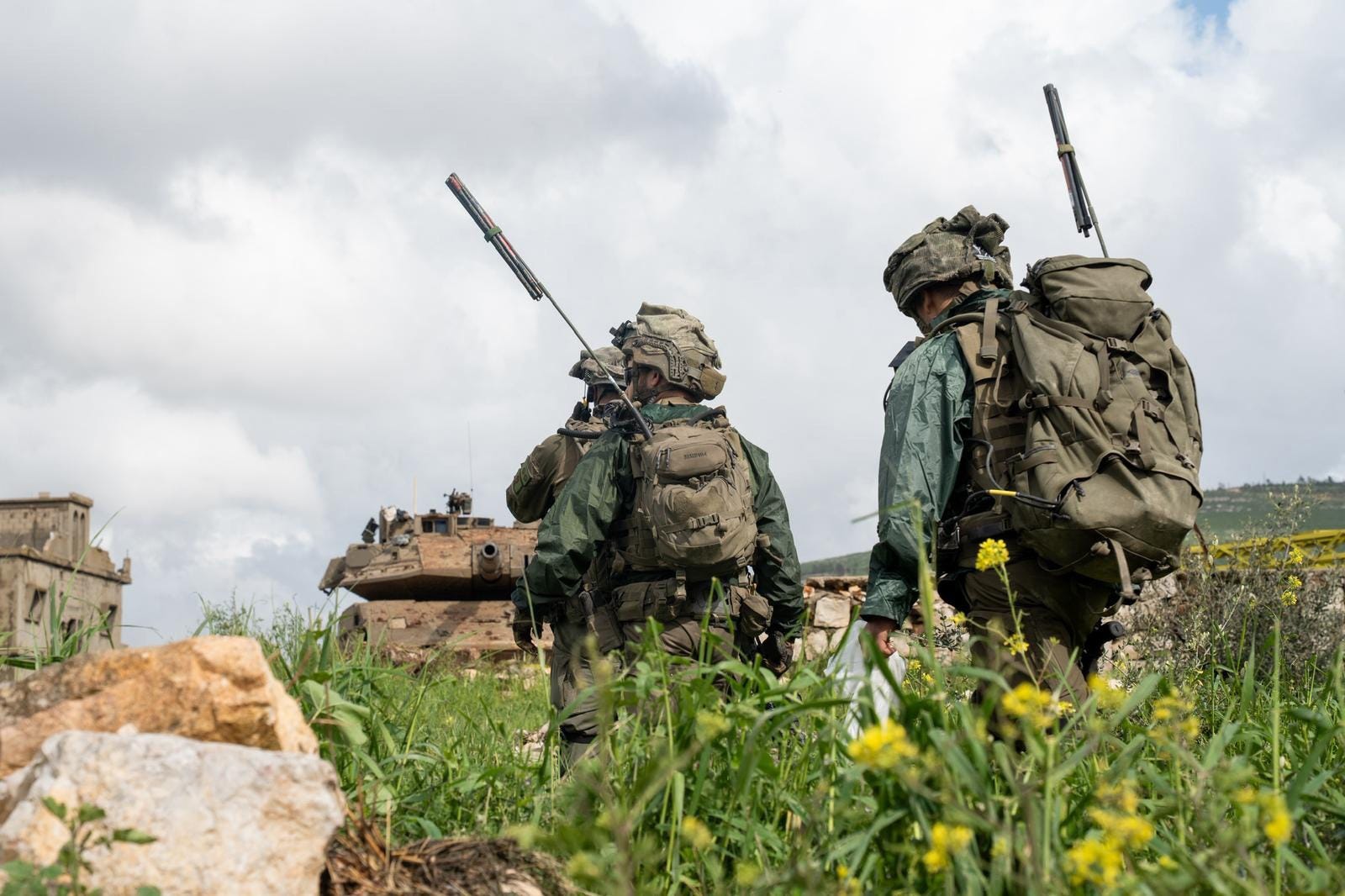
IDF forces in Southern Lebanon. (IDF)
It’s Monday, May 18, and both the Israeli government and the IDF are hinting, through statements and actions, that they are preparing for the renewal of American strikes in Iran. Tehran has just submitted its latest diplomatic proposal: a commitment of highly questionable value to refrain from producing nuclear weapons. Conspicuously absent from the document is any mention of halting uranium enrichment or opening of the Strait of Hormuz.
Diplomacy appears to be faltering, but before the next Lion-themed operation, it is worth assessing the success of the last campaign.
Yesterday, Maj. Gen. (res.) Tamir Hayman, executive director of the Institute for National Security Studies and a former head of the Military Intelligence Directorate, published an article with several previously unknown details about the course of the war. Along with the revelations, Hayman gives an assessment: “Despite tactical achievements, the campaign’s two main centers of gravity—the Iranian regime and the nuclear project—remain without fundamental change.”
According to Hayman, Operation Rising Lion in June 2025 “did not pave the way for a permanent solution, and Iran demonstrated a rapid and dangerous recovery capability.” In the nuclear arena, the Iranians rehabilitated the Fordow nuclear facility and accelerated the construction of “Pickaxe Mountain,” which is (allegedly) immune to airstrikes. In the missile domain, they reached a production rate of about 125 ballistic missiles per month and had accumulated a large stockpile of about 2,500 by the start of Roaring Lion. Tehran also led a rapid rehabilitation of Hezbollah by doubling its budget and renewing supply routes through Syria, despite the fall of the Assad regime.
Hayman notes a significant disconnect between the political and military echelons at the outbreak of the war. Israel’s political ambition was the overthrow of the Iranian regime, whereas the IDF’s stated military objective was limited to the attrition of its capabilities. Despite this gap, the first stage of the campaign—spanning from the initial decapitation strikes against senior leadership to the eventual cancellation of the Kurdish incursion—focused heavily on the political aspiration of regime change. The decisive factor of this phase was meant to be an incursion by Kurdish fighters, designed to inflame interethnic tensions, destabilize the government and pave the way for a new, moderate leadership. This maneuver was also intended to serve as the keystone for a broader series of covert operations with similar objectives.
However, the plan was derailed when the Kurdish operation was canceled, likely due to pressure from Turkish and Arab allies. As Hayman puts it, “Once the covert operations were removed from the equation, the primary mechanism for destabilizing the regime’s stability was eliminated.”
Following the high-level assassinations, the campaign’s second phase pivoted to degrading Iranian capabilities. A central objective here was “the destruction of the nuclear project through an innovative and unique approach”—likely requiring a widespread ground maneuver. However, Iran had anticipated the decapitation strikes and proactively decentralized its military command structure before the war. Field officers were granted preauthorization to launch ballistic missiles and close the Strait of Hormuz without waiting for top-down orders. Furthermore, a governing vacuum was averted when Mojtaba Khamenei was appointed supreme leader at the behest of the IRGC.
This decentralized authority allowed Iran to successfully close the Strait of Hormuz, securing global leverage that altered American priorities and redirected attention toward the energy markets. Meanwhile, the campaign exposed the limitations of airpower; by Hayman’s assessment, most of Iran’s nuclear and missile assets survived by being housed in deep-underground bunkers. Consequently, the ultimate “crown jewel” of the military campaign—the destruction of the nuclear program—was not fully realized before the first ceasefire took effect.
Assessing this new reality, Hayman warns that Mojtaba Khamenei is more radical than his father and is no longer bound by the previous religious decree prohibiting the production of nuclear weapons. Because the Iranian leadership will likely conclude that “only nuclear deterrence can prevent the next war,” Hayman asserts that the defense establishment must operate under the working assumption that a clandestine Iranian nuclear weapons project is already underway.
Hayman’s article also reveals that it took Iran a full 40 hours of aggressive pressure to compel Hezbollah to enter the current campaign. Initially, Hezbollah attempted to deceive both Israel and the Lebanese public into believing their strikes were purely “symbolic.” To create the illusion of compliance with demilitarization agreements, the group intentionally withheld fire from south of the Litani River until March 5. However, Hayman notes that Hezbollah had secretly maintained combat infrastructure and fighters in that southern zone the entire time.
Although Hezbollah has been significantly degraded militarily, Hayman warns that retaining just 10 percent of its pre-November 2024 capabilities still leaves it with a formidable arsenal of approximately 15,000 rockets and missiles.
This looming threat is compounded by a frustrating tactical reality on the ground. Late last week, the U.S. announced a 45-day extension of the ceasefire in Lebanon. Yet, despite this truce on paper, the conflict continues; now the IDF operates under severe American constraints, with President Trump largely prohibiting strikes in Beirut and the Beqaa Valley.
Meanwhile, over the past two weeks, drone attacks and cross-border incidents have killed seven Israeli soldiers and civilians, wounding dozens more. While the establishment of the “Yellow Line” buffer zone in southern Lebanon has mitigated some direct fire, holding this territory places IDF forces on the ground at significant risk.
Hayman concludes with stark recommendations for the path forward. If diplomacy is the chosen route, an airtight, highly stringent nuclear agreement is an absolute necessity. Conversely, if the decision is to resume the war, it must be explicitly defined as a campaign to eliminate threats—with the Iranian nuclear program targeted first. While President Trump currently appears to be leaning toward the military option, Hayman issues a clear warning regarding any future operation: “Aerial strikes alone will not be enough.”
MK Boaz Bismuth seen with Haredi MK’s during a plenum session at the assembly hall of the Knesset. (Yonatan Sindel/Flash90)
It’s the fourth quarter, last down, and Benjamin Netanyahu is throwing a Hail Mary. After admitting to ultra-Orthodox leaders that he lacked the votes to pass their conscription exemption, the coalition found itself barreling toward a Wednesday vote on dissolution.
While Haredi factions are pushing for a September election, Netanyahu is desperate to run the clock down to its legal limit in October. This delay would buy him crucial time to fast-track his legislative agenda and secure potential political victories abroad. To force this delay, the prime minister is executing one final play: returning the controversial draft bill to the agenda for advancement this Wednesday.
Will this preserve his coalition?
Quite possibly. The Haredi United Torah Judaism party is currently split in its strategy. Half of the party is threatening to dissolve the coalition because of the draft bill, while the other half is using the draft bill as a pretext to dissolve the coalition.
The pro-alliance half wants to maintain the current government to secure further gains. Its goals include a five-year plan that transfers hundreds of millions of shekels to ultra-Orthodox community programs, alongside an amenable draft bill. Even if the Supreme Court will inevitably strike the new legislation down, it would still grant the community a few crucial months free from government sanctions.
Meanwhile, the pro-election half is done with Netanyahu. They believe a brighter, more amenable political alliance awaits them on the other side of an election. Motti Babchik, a top aide to UTJ Chairman Yitzhak Goldknopf, belongs to this faction. He argues that nothing has functionally changed regarding the coalition’s lack of a majority, dismissing Netanyahu’s latest maneuver as a mere “noise-making” tactic designed solely to delay the inevitable election.
Still, they wouldn’t call it a Hail Mary if it wasn’t a prayer. Netanyahu is betting on the pro-alliance faction winning out and is marshaling his team for the final push. The prime minister’s office spent the weekend aggressively whipping votes, calling nearly all coalition members and threatening to publicly shame Likud MKs who secretly oppose the bill but fear political blowback. With Likud primaries set to determine electoral list positions before the elections, members must weigh which carries the darker mark: Likud traitor or draft dodger.
But behind the scenes, Netanyahu is working on a backup plan. The coalition is launching a legislative blitz in a race to advance controversial judicial and media overhaul bills before the dissolution vote. This includes a media regulation bill and a proposal to split the role of the attorney general into three distinct positions. Without getting too deeply into the technicalities, the latter bill would effectively remove the biggest thorn in the coalition’s side: Attorney General Gali Baharav-Miara.
Netanyahu initially cited this legislation as a reason for the Haredim—the attorney general’s archrivals—to delay leaving the coalition. Ultimately, this legislative push serves one of two purposes. It is either an incentive to keep the coalition together, or it’s an insurance policy, ensuring that even if the government falls, the coalition racks up some serious ideological points before the election.
English Editor: Ari Tatarka
If you enjoy the newsletter, you can show your support by becoming a paid subscriber—it really helps keep this going. I’m also offering a special monthly briefing for a small group of premium members. I’d love to have you join us—just click below to find out more.
Thanks for reading It’s Noon in Israel! Subscribe for free to receive new posts and support my work.


So: “Prior to October 7, Maj. Gen. (Res.) Tamir Hayman—who served as the head of the IDF’s Military Intelligence Directorate (Aman) until late 2021—assessed that Hamas was deterred from a full-scale war and heavily focused on governance and economic stability” So of course now he is saying Iran is totally undeterred and undiminished. Once burned, twice shy. This is not a serious analyst. Give me te analysis of someone who was correct about Hamas, and what they have to say about Iran. I read many such who while they agree that more needs to be done, do not feel there is no significant degradation in the past two attacks on Iran. BTW, people who know something about Iran will point out Khamenei Jr. has been groomed by IRGC for decades and would have been appointed when his octaginarian dad kicked the bucket. So imagine this happened if Iran was at full strength with an amazing state funeral send off for the old man who died in his bed. There was a reason the Destroy Israel clock in Tehran was set to 2030. That clock has been significantly reset,
Agree with Aron T and sometimes wonder at the complacency to accept the proclamations of so called experts. Back in around 2019 when the gazans were practicing storming the border I was horrified at how many "experts" ignored the significance of those actions. So not sure I'm accepting this expert's opinion.