
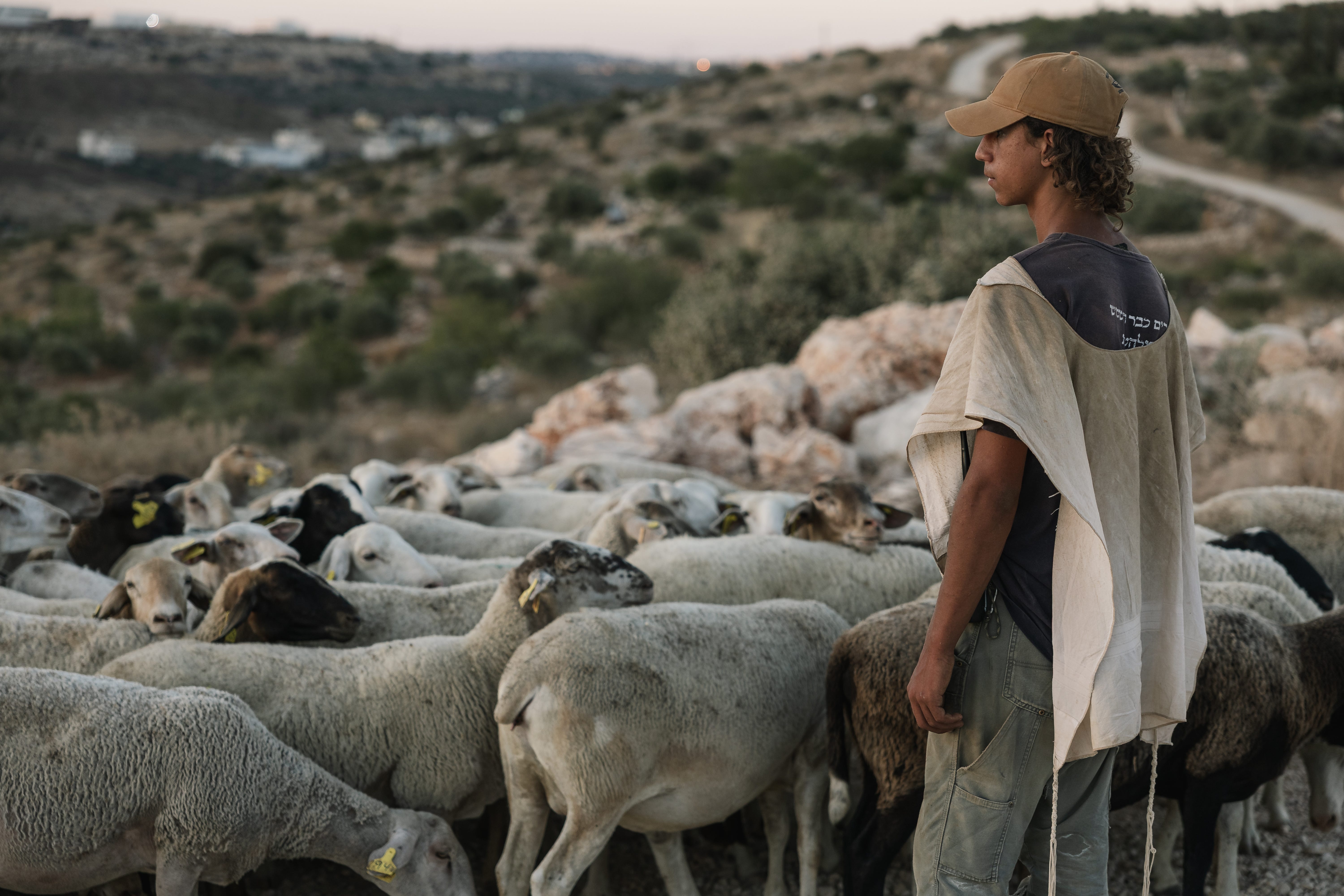
A Jewish shepherd tends to his flock of sheep and goats at Zarda Farm near the Israeli settlement of Peduel in Judea and Samaria, July 28, 2026. (Hilel Ben Or/Flash90)
It’s Friday, September 18, and unclassified material circulated this week at Central Command headquarters: the latest episode of Hanoch Daum’s satirical series “Life Is a Hard Time,” which centers on the hilltop youth. In 23 minutes, it explained everything: the settler leadership’s double message, the army’s helplessness, the anarchism, the lost youth.
Life is indeed a hard time, but less so than the news suggests. Nationalist crime in Judea and Samaria fell from 121 incidents in July to 86 in August to 22 so far in September. The number of innocent Palestinians murdered by settler gunfire stands at a flat zero, pending review of one incident earlier this year whose circumstances are still unclear. The number of innocent Jews murdered by Palestinian gunfire stands at three. That is after countless foiled cells, seized explosive drones, last-minute arrests and a round-the-clock presence in the refugee camps.
That it is far more dangerous to be a Jew than a Muslim in Judea and Samaria is obvious. What is astonishing is that it is much more dangerous to be an Arab in Ramla than in Ramallah. This year, 161 Arabs were murdered inside Israel in criminal violence, 34 Palestinians in Judea and Samaria fell victim to local gang wars and 10 bystanders were killed in IDF operations.
Next to the Palestinian explosives arena, nationalist crime is a match. But in a fuel-soaked environment, a match can set the whole area ablaze. It can do so through terror attacks, or through a massive wildfire of international sanctions that has only just begun.
Contrary to the smears, David Zini’s Shin Bet is doing no less on this front than his predecessors’—in fact, more. The army itself has started imposing economic penalties. Recently, six-figure bills for the cost of evacuation were sent to unauthorized outposts that insisted on going up onto the land again and again. Another order now allows vehicles found at such outposts to be confiscated. You wouldn’t believe how many parents discovered their company lease car had been seized because their son decided to put down roots in Area B.
At a recent meeting deep in the field, a few hilltop youths told a senior officer they were the modern-day equivalent of the Tower and Stockade policy of the early days of Zionist settlement. The officer replied that there are 104 new settlements and 170 brand-new farms, all with government approval, and every one of them would be glad of the extra manpower.
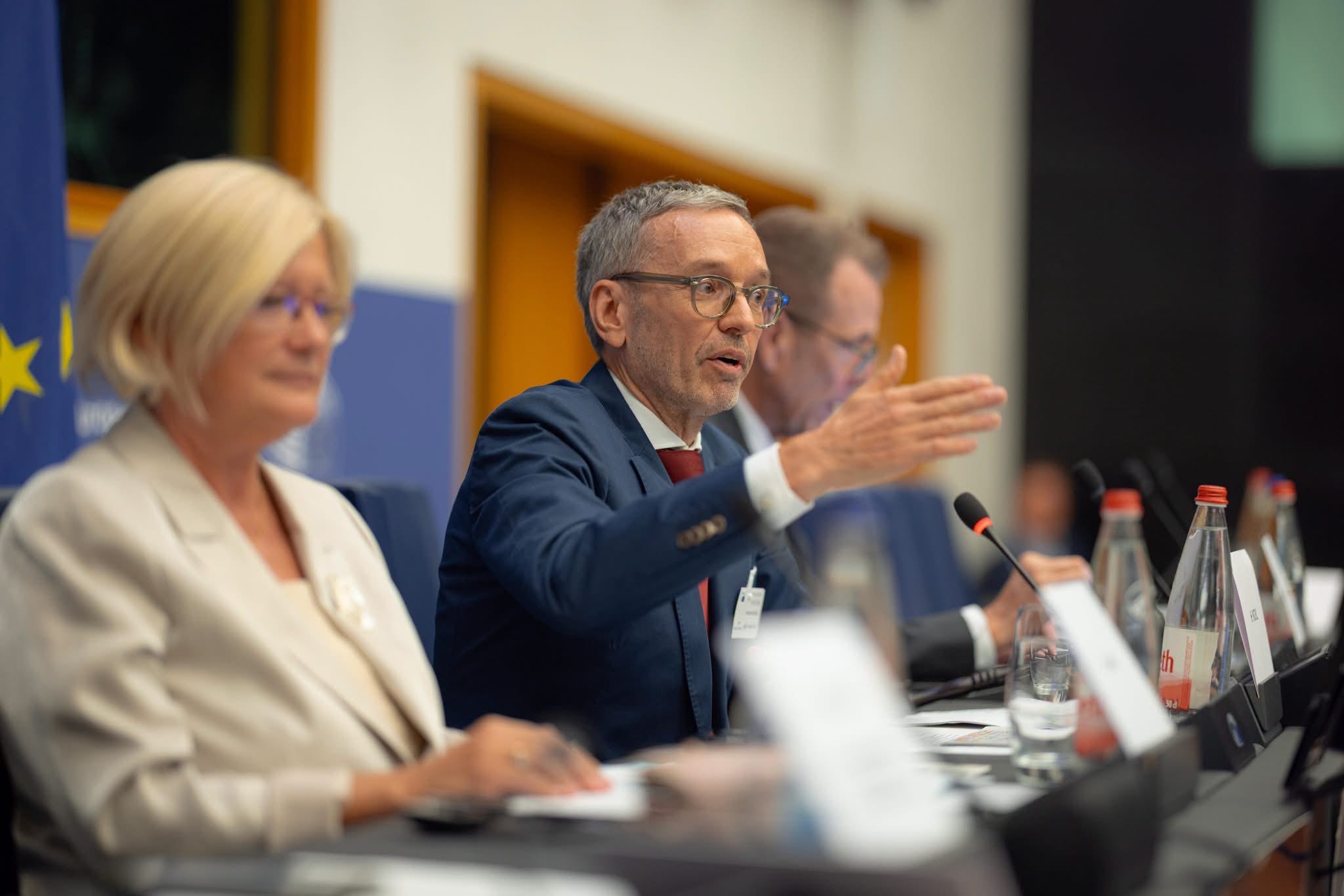
Austria’s Freedom Party leader Herbert Kickl at the club meeting of the "Patriots for Europe" in Strasbourg, September 16, 2026. (@herbert_kickl/X)
What is one to do when a party founded by former Nazis adopts the International Holocaust Remembrance Alliance’s definition of antisemitism, apologizes for its past and pledges to be a stalwart friend of Israel? That’s the question facing Austrian Jews and Israeli decision makers this week, after Austria’s Freedom Party leader Herbert Kickl apologized to the Jewish people from the floor of the European Parliament.
The Freedom Party of Austria was founded in 1956 by a former Nazi agriculture minister and SS officer. When it entered government in 2000, Israel recalled its ambassador from Vienna, and the other 14 EU states curtailed their bilateral contacts with Austria. When the FPÖ returned to government in 2017, Israeli officials still refused to meet its ministers.
Twenty-six years after that recall, at a conference in the European Parliament titled “Islamism and Antisemitism: Threats to Europe’s Freedom,” Kickl told an audience that included senior Likud members that Austria under his chancellorship would prove itself a loyal and unshakeable friend of Israel. He read all 11 IHRA examples aloud, one by one, and said why: so that nobody could later call the recognition non-binding, incomplete or meant for internal consumption. He apologized as party chairman to Austria’s Jewish citizens, to the victims and survivors of Nazism and to the Jewish people, and endorsed moving Austria’s embassy to Jerusalem. The conference ended with dozens of MEPs from Europe’s right-wing parties signing a charter adopting the IHRA principles.
Israel’s reaction was split. Diaspora Affairs Minister Amichai Chikli, who has spent two years building this channel alongside FPÖ MEP Harald Vilimsky and Samaria Regional Council head Yossi Dagan, called the speech “one of the most significant speeches ever delivered by an Austrian politician regarding Israel and the Jewish people.” The competition for that title is presumably not what Chikli wanted to evoke. Foreign Minister Gideon Sa’ar was cooler. The remarks were “an important and positive development,” he said, but “building trust also requires translating commitments into actions.” He announced no change in Israeli state policy toward the party.
The gap between Chikli and Sa’ar is two answers to the same question: where is Israel to find new friends? Sa’ar has been working the global south, South America in particular, with some success. Chikli and much of Likud are prospecting the untouched corners of Europe. The latter approach has greater reward, but also greater risk, potentially clashing with Israel’s role as protector of world Jewry. European Jews have historically aligned against the far right, much of it born from the ruins of Nazism and carrying a long record of antisemitism.
The FPÖ’s behavior at the conference didn’t mollify that concern. Vilimsky, who organized the conference, turned on the Israelitische Kultusgemeinde, the elected representative body of Austrian Jewry, which he said had a “very, very left” leadership, fraternized with the socialists and missed no opportunity to act against the FPÖ. Those “few leftists in Vienna,” he added, did not concern him. Presumably because of all his new “friends” in Jerusalem.
The warming relationship between Israel and the European right is not a spontaneous outpouring of philosemitism, but rather coincides with its rise in mainstream politics. In the September 2024 election, the FPÖ took 28.8 percent and 57 seats, its best national result. Joining the European mainstream requires shedding the Nazi past, and buying trust from a local Jewish community is slow, expensive and unguaranteed. Israel, it appears, can render the same service in exchange for the international support it has been desperately short of in recent years.
Israel shouldn’t mortgage its relationship with world Jewry to buy support, and it can’t afford to refuse friendship outright. In 2010 I interviewed the FPÖ’s then-leader, Heinz-Christian Strache, after the party’s strong showing in the Vienna state election, and though he went out of his way to make me, an Israeli, feel comfortable, I couldn’t shake the plastered-on smile he gave me. Legitimacy from Israel and from the Jewish people must be earned, not exchanged.
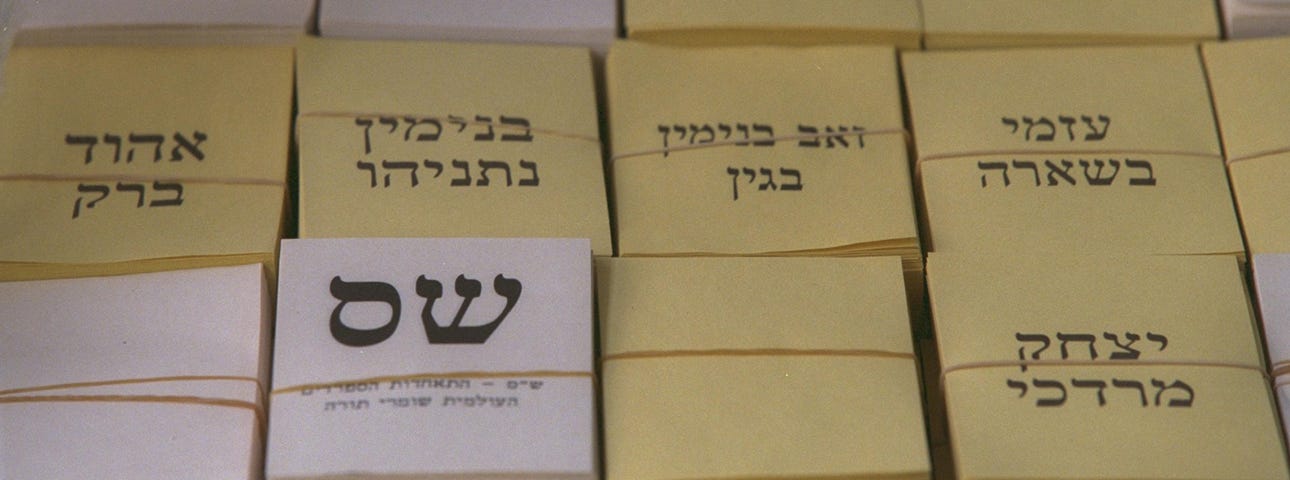
Ballots prepared for the 15th Knesset and direct Prime Ministerial election in Israel, May 17, 1999. Candidates include Ehud Barak, Benjamin Netanyahu, Ze’ev Benni Begin, Azmi Bishara, and Yitzhak Mordechai. (Avi Ohayon/GPO)
Israel once had direct elections for prime minister. Then we were left with just the Knesset vote. Today, every ballot is three votes in one: for the party printed on it, for the prime minister that party will back and for the bloc it is an inseparable part of.
The conventional wisdom is that recent years have hardened the blocs, which were once far more fluid. So Netanyahu doesn’t disown Ben-Gvir, Eisenkot signs a surplus-vote agreement with Yair Golan, and almost nothing is left in the middle. But it turns out not everyone has made peace with being forced into a shared apartment.
Overall, 17 percent of the public still say the future coalition partnerships either make them seriously reconsider their vote or make them significantly less inclined to cast it that way. In Likud, the partnership with the Haredim and Ben-Gvir has 21 percent of voters rethinking their choice. The share is smaller for Bennett (18 percent), Liberman (15 percent) and Eisenkot (12 percent), but in practice no fewer seats’ worth of voters are on the fence. Unsurprisingly, the further you move from the center, the lower the share of waverers.
It works the other way too. More than a quarter of Winter’s supporters are still hesitating, most likely because of his declarations of support for Netanyahu. Some may also fear, from the other direction, that he will end up going with Liberman and Bennett. For the new partnership between Yoaz Hendel and Yaron Zelekha, the figure jumps to 32 percent. For these two parties, this is an existential decision. What they say on the matter could ease voters’ concerns, or confirm them and bury the parties below the threshold.
English Editor: Ari Tatarka
If you enjoy the newsletter, you can show your support by becoming a paid subscriber—it really helps keep this going. I’m also offering a special monthly briefing for a small group of premium members. I’d love to have you join us—just click below to find out more.
Thanks for reading It’s Noon in Israel! Subscribe for free to receive new posts and support my work.


"Settler violence" has not declined You just woke up that it never existed.