It’s Noon in Israel: The Mossad Admits Failure
Also, the concrete blocks at the center of the election.
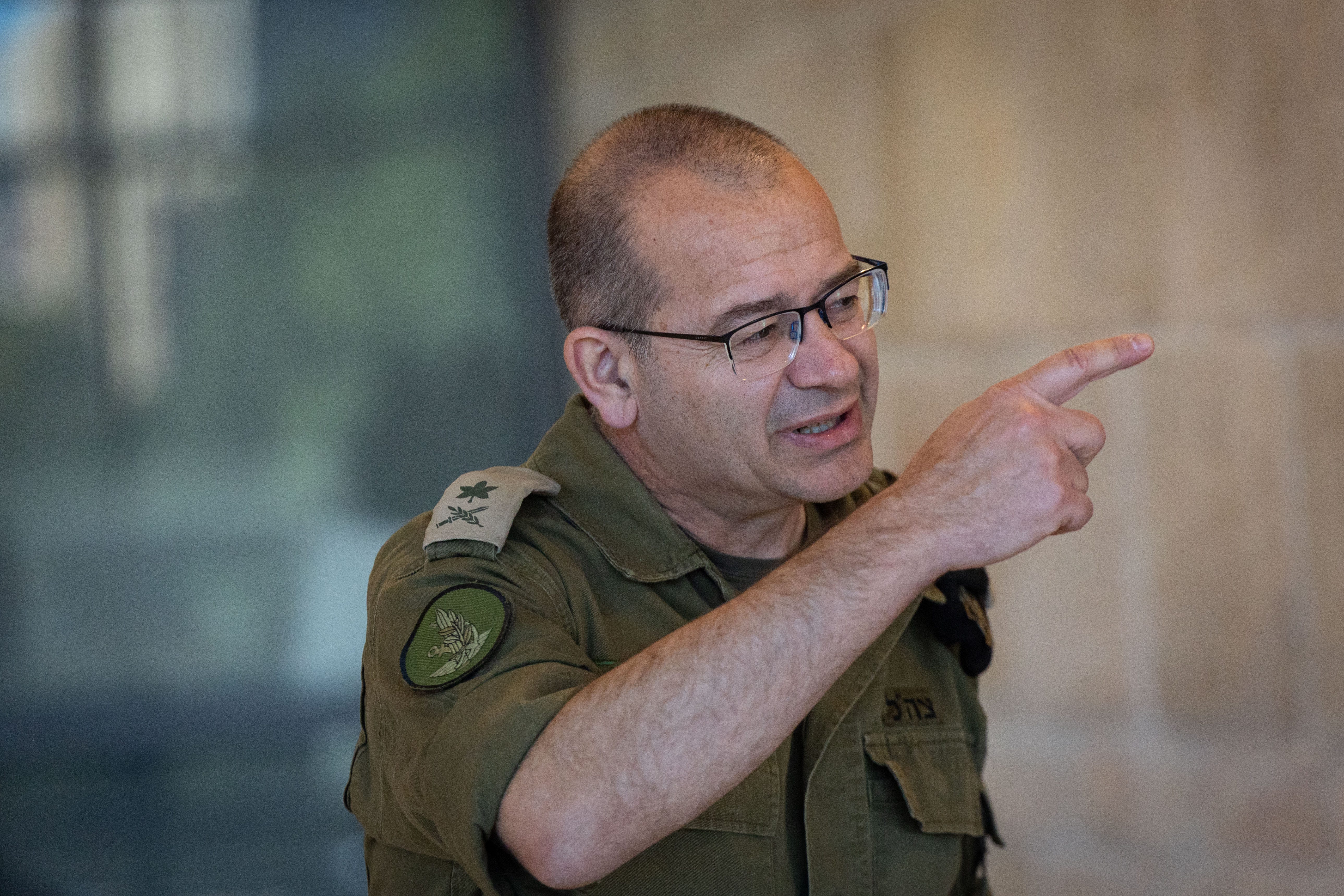
Incoming Mossad Director Maj. Gen. Roman Gofman arrives to a Defense and Foreign Affairs Committee meeting at the Knesset, February 5, 2026. (Yonatan Sindel/Flash90)
It’s Friday, August 7, and Yitzchak Rabin once remarked that the future Mossad Chief Meir Dagan had “the unique capacity to invent antiterrorist operations that look like movie thrillers.” But what happens when the movie doesn’t have a happy ending?
Presumably, consequences for the writers.
Current Mossad Director Roman Gofman has removed the two officials most closely associated with the agency’s plan to topple the Iranian regime. One had run the Mossad’s intelligence directorate since December; the other headed the Iran division. This follows the ouster of the deputy director last month, who was similarly linked to the operation.
Their plan centered on Iran’s minority populations, built on the theory that armed pressure at the periphery would revive the mass protest movement at the center and finish the job. Removing the architects of this strategy amounts to acknowledging the obvious: the plan failed.
It appeared to start successfully. Israel conducted strikes on Islamic Revolutionary Guard Corps positions along Iran’s border with Iraq, timed to open a corridor for Kurdish fighters to cross into Iranian Kurdistan and push toward northwestern cities. Thousands of young Kurds were expected to join them. They were slated to advance eastward while armed militias from other minority groups struck Iranian territory from all directions, pushing toward Tehran. The U.S. had armed these proxy forces, but the plan unraveled when Fox News reported the attack was imminent. Turkish President Erdogan phoned Trump and, in a furious call, talked him out of U.S. backing for the operation.
A pivot to military capability targets, several ceasefires, countless threats and reversals later, we are left with the Supreme Leader still alive and kicking, though only on one leg.
The Mossad doesn’t work like the military; it functions in a fantasy world of exploding pagers and drone factories in enemy countries. That makes attributing operational blame difficult, especially for a plan that was edited during execution. Still, this was the Mossad’s most ambitious plan in its 76-year history, and its greatest failure. Inevitably, heads had to roll.
Security sources noted the departures were made by mutual agreement, with both officials reassigned to other roles within the Mossad. This lateral transfer rather than an outright dismissal is a manifestation of the central paradox of an organization tasked with literal creative destruction: how to hold planners accountable for overpromising without stifling out-of-the-box thinking. As former Director David Barnea recently argued in defense of the plan, “every Mossad operation is unprecedented and seems lunatic.”
Still, Mossad insiders allege that the transfer of the two officials is intended to prevent one of the rolling heads from being Netanyahu’s. But that will be for the voters to decide come October.
The dismissals are also part of a larger organizational shift inside the Mossad, which is facing significant internal resistance. Gofman is the first outsider to be appointed head of the agency since Dagan in 2002 and is attempting a similar internal reform; unsurprisingly, an organization founded on secrecy with a notorious and somewhat deserved ego is not a fan of people outside the family taking the reins. According to Dagan, 300 people quit after his appointment—so far, Gofman has only fired three, and only those with whom he reportedly had little to no chemistry.
Ultimately, Dagan was one of the most successful directors the Mossad has ever had, running it longer than anyone else in history except the legendary Isser Harel. That’s because he got results. Gofman’s tenure will be measured in exactly the same way.
Yellow Line markers being installed in Gaza. (IDF)
A few hundred concrete blocks painted yellow now sit at the center of a debate that will shape—no exaggeration—the entire Middle East. On the day the hostages came home, ten months ago, the IDF held 52 percent of the Gaza Strip. Since then, it has expanded to 70 percent. Gazans wake up to find the yellow line closer than it was, sometimes forcing them to evacuate again to stay out of the field of fire.
Israel touts its expanding control of the Strip, though in reality there’s no advance of forces or new positions—only the widening of our troops’ firing line against approaching threats. The gap between the original lines and the current ones is what the fight over Gaza’s future now turns on. In principle, Israel doesn’t believe Hamas will disarm (or surrender its weapons to be melted down—a new American idea). It has no interest in a photo-op with the U.S. president, as long as it isn’t asked to withdraw.
The Americans tell Israel: four hundred feet between you and them—what’s that? Pull the concrete blocks back a little, and we’ll use it to push Hamas into the next stage. Worst case, a few hours of crane work and you’re back where you started. In Jerusalem, they resist, fearing a return to the withdrawals-first pattern that paved the whole road to October 7. And in the background there’s another, political worry: with less than three months to the election, any withdrawal or agreement hurts Likud and the coalition. Ben-Gvir will howl from the right; Lieberman, Bennett, and Eisenkot from the left.
The Americans were caught off guard when Israel dug in against a withdrawal they considered purely tactical. Israel reminded them of the electoral calendar—and of the fact that Netanyahu has no great desire to concede now and collect the reward, if ever, only when it’s already too late. So, the thinking goes, let’s turn to the opposition leaders and have them publicly back the deal struck at the White House. For some reason, Lieberman, Bennett, Eisenkot, and Golan have yet to step in front of the cameras to call for an Israeli withdrawal and embrace Netanyahu. Surprising.
A round of primaries was held in the United States this week, and in a striking number of them, Gaza was front and center. Israel has a supreme interest in putting the issue to rest and beginning to recover in global public opinion—not, heaven forbid, by leaving Hamas in place, but through temporary tactical maneuvering that lets the Americans and their regional allies keep isolating the terrorist group that still, barely, controls the ruins of the city.
This is an excerpt from my weekly column in Israel Hayom.
English Editor: Ari Tatarka
If you enjoy the newsletter, you can show your support by becoming a paid subscriber—it really helps keep this going. I’m also offering a special monthly briefing for a small group of premium members. I’d love to have you join us—just click below to find out more.
Thanks for reading It’s Noon in Israel! Subscribe for free to receive new posts and support my work.


Amit writes: "A round of primaries was held in the United States this week, and in a striking number of them, Gaza was front and center. Israel has a supreme interest in putting the issue to rest and beginning to recover in global public opinion"
What??!! Am I not understanding something?? Are you suggesting, Amit, that Israel reduce its strategic depth into Gaza, because Islamic radicals are taking over the Democrat party? Is there something I'm not understanding??
Israel is an obsession for many young Americans and quite a few politicians of both political parties, although it’s worse for the Democrats who count outright Hamas supporters among their ranks. No matter what Israel does or does not do, it will be judged and deemed guilty. This being the case, Israel must follow its own interests and should not look forward to the news cycle moving on. It won’t.