What Does Bibi Know?
Also, a march on Gaza, and an incredible First Temple discovery.
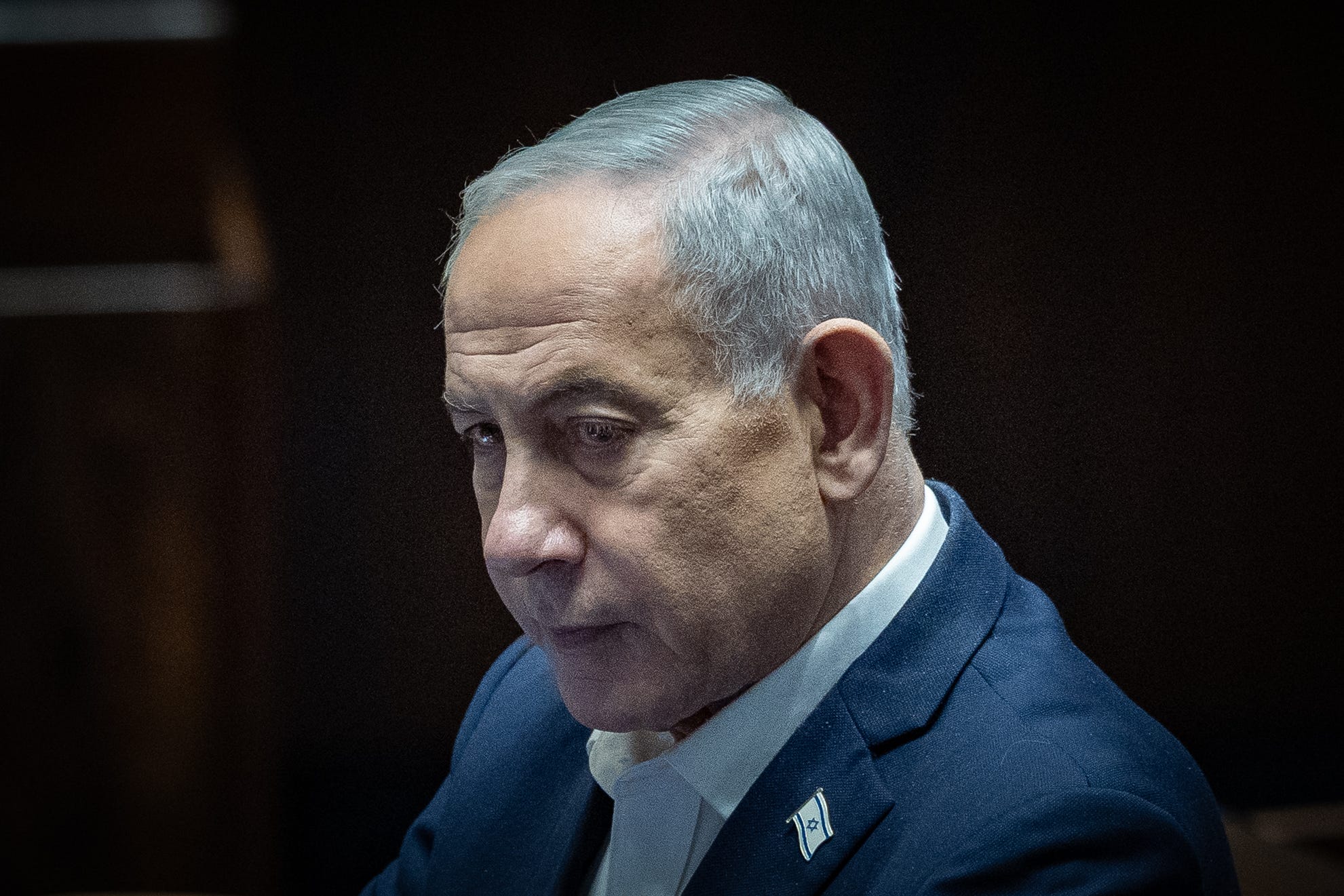
Israeli Prime Minister Benjamin Netanyahu attends a vote at the plenum hall of the Knesset, July 16, 2026. (Yonatan Sindel/Flash90)
It’s Monday, July 20, and what does Bibi know that we don’t?
As part of his monthslong campaign for tighter control over his party’s list, the Likud Constitution Committee agreed on Sunday to reserve eight slots on the Knesset slate—and, on Bibi’s request, to cancel the upcoming primary altogether if it can’t be held because of a “wartime situation.” The primary is set for August 17. The wartime clause suggests Benjamin Netanyahu doesn’t rate the odds of a flare-up before then as especially low.
The same committee authorized him, should a military campaign intervene, to convene a five-member panel of Likud mayors to draw up the candidate list in the primary’s place. Addressing members, Netanyahu insisted he remains “in favor of a primary,” but warned that “there is a possibility that we could find ourselves in an exceptional security situation that would make it difficult to hold campaign events.”
“It could fall on the day of the vote or beforehand, and that would make voting difficult,” he said.
The charge that Bibi has dragged out the war to dodge his own prosecution is a fiction. But would he start one to bury a party primary? Also no—though it’s not hard to see why he wouldn’t grieve its passing.
Netanyahu suffers from the same affliction as the Democrats in the U.S.: fear of his own radical base. The Democratic Party in Maine nearly handed its Senate nomination to Graham Platner, the candidate with the Nazi tattoo. Likud voters, handed a Knesset seat to Tali Gotliv, who accused an anti-Netanyahu protest leader of coordinating with Hamas and the October 7 massacre on the strength of ravings lifted from a conspiracy blog.
It’s the structural curse of every party that runs primaries: the voting base sits well to the ideological edge of the broader electorate it’s meant to represent. Netanyahu, alert to this, wants reserved slots carved out at the expense of elected ones. A Bibi-controlled list isn’t just more moderate and more electable—it reasserts his grip on a party that, however distantly, has begun to imagine a post-Bibi future. As his chief internal opponent, MK David Bitan, put it none too subtly: “Today, we vote because of Netanyahu; tomorrow someone new will come and receive those reserved spots.”
While he trims his own radicals, he’s wishing the other side’s the best of luck. The Israeli Democrats hold their primary today. Naor Narkis—the hardcore secularist who posted AI videos of himself bulldozing Torah institutions, digitally striping the head coverings off religious female Knesset members, and has called on Israelis to make “aliyah” (the Hebrew term for immigration to Israel) to Berlin—is likely to land on their list. His brand of ultra-secularism has a constituency in the primaries, but it plays as the most cartoonish caricature of the secular Israeli: repulsive to exactly the lightly traditional voter that general elections are won and lost on.
That isn’t the Democrats’ problem alone. Likud’s campaigners are crossing their fingers for the Narkises of the world; nothing makes it easier to paint an opposition bloc of Eisenkot, Lieberman, and Bennett as anti-religious. Never before have so many Haredim prayed so hard for a secularist’s success.
A normal list is a necessary condition for a Netanyahu victory, not a sufficient one. The other is Iran. His party caught a brief updraft at the launch of Operation Rising Lion, then bled two to three seats to the deeply unpopular April ceasefire. A fresh campaign could pull those voters back into the fold.
This election is a game of inches: two or three seats are the distance between a governing majority for the opposition and an insurmountable deadlock that Bibi can exploit. Which returns us to the opening question: What does Bibi know that we don’t? Perhaps nothing. Only that he means to be holding every possible lever within reach for the moment he finds out.
Jews who support the re-establishment of Israeli settlements in the Gaza Strip march near the Israeli border with Gaza, July 19, 2026. (Tsafrir Abayov/Flash90)
Government ministers on Sunday joined thousands of settler activists in a march through a closed military zone to the Gaza border in a show of support for Jewish settlement of the territory.
The “March of Thousands,” marking 21 years since Israel’s evacuation of the Gush Katif settlement bloc inside the Gaza Strip, drew leading figures from the religious Zionist camp—National Security Minister Itamar Ben Gvir and Finance Minister Bezalel Smotrich among them—alongside lawmakers from Netanyahu’s Likud.
The name isn’t mere aspiration. There is a real constituency of Israelis that holds settlement as the only durable path to security, and on Sunday they came out to say so. But there is also a reason they couldn’t call it a march of millions. They remain a minority: A majority of the public, Jews and Arabs alike, opposes Jewish settlement in Gaza, even as most of the right supports it in the abstract.
The more telling detail was the turnout of government officials: 28 ministers and coalition lawmakers, by the organizers’ count. Representatives of Religious Zionism and Otzma Yehudit were a given—resettling Gaza is written into their platforms. But the march also drew more than 10 Likud members, in open protest against their own leader’s emphatic decision not to reestablish settlements in the Strip.
One imagines these members are hedging their bets—in case a war doesn’t cancel the primaries after all.
(Israel Antiquities Authority)
2,600 years ago Wednesday, fire swept through Jerusalem and brought down the First Temple, according to Jewish tradition. This week, archaeologists pulled a piece of that very fire out of the earth.
Massive wooden beams, blackened and charred by the flames that consumed the city in 586 B.C., were unearthed at Jerusalem Walls National Park in the City of David, the Israel Antiquities Authority announced Monday. They had lain in place since the day Nebuchadnezzar’s Babylonian armies destroyed Solomon’s Temple.
The beams once formed the roof of an inner courtyard in a building close to the Temple. The wood collapsed in the blaze, but plaster melting off the walls flowed over it and sealed it, tucking the charred timber into a protective shell that would hold for 26 centuries.
“This discovery makes you feel that you are witnessing the very moment of destruction, the moment when it all happened,” said IAA excavation director Efrat Bocher. “It’s deeply moving.”
But the most haunting detail may be the choice the ancients made. When Jerusalem’s residents returned from the Babylonian exile to rebuild the city, the excavation directors believe, they left the ruins deliberately in place, laying the new city over the scars of the old. A landscape of memory, as Dr. Yiftah Shalev put it, seeking to preserve what once existed.
Given that I and millions of other Jews will be fasting on Wednesday in memory of the Temple, that impulse doesn’t feel ancient at all. Tisha B’Av is the same choice those rebuilders made, carried across 2,600 years: to keep the past present in their lives rather than pave it over. Commanded in Deuteronomy, it has since become an inseparable core of Jewish identity: “Remember the days of old, consider the years of ages past.”
English Editor: Ari Tatarka
If you enjoy the newsletter, you can show your support by becoming a paid subscriber—it really helps keep this going. I’m also offering a special monthly briefing for a small group of premium members. I’d love to have you join us—just click below to find out more.
Thanks for reading It’s Noon in Israel! Subscribe for free to receive new posts and support my work.


You wrote you'll be fasting on Wednesday as it's Tisha b'Av. It's actually Thursday!!
.שלום עמית, אני עוקבת אחריך (מארה"ב) ומאוד מעריכה אותך ואת כתבותיך. בלשון המעטה אומר שהזדעזעתי מקריאת הפסיקה החמישית במאמרך האחרון מה-20 ביולי. אני מאוד מעורה בפוליטיקה האמריקאית וקצת פחות בישראלית. הפסקה שלך משדרת הקבלה בין גרם פלסנר וטלי גוטליב. אינני "ימנית קיצונית" ובהתחשב במה שמתרחש בארץ אינני מבינה איך אתה רואה בה גורם רדיקאלי ברמה של פלטשר. אנא התנצל על ההשוואה המעוררת סלידה הזאת! תודה, אילנה