War Is Coming
Also, the ICC is considering an arrest warrant for Bezalel Smotrich, and Israel’s three-body problem.
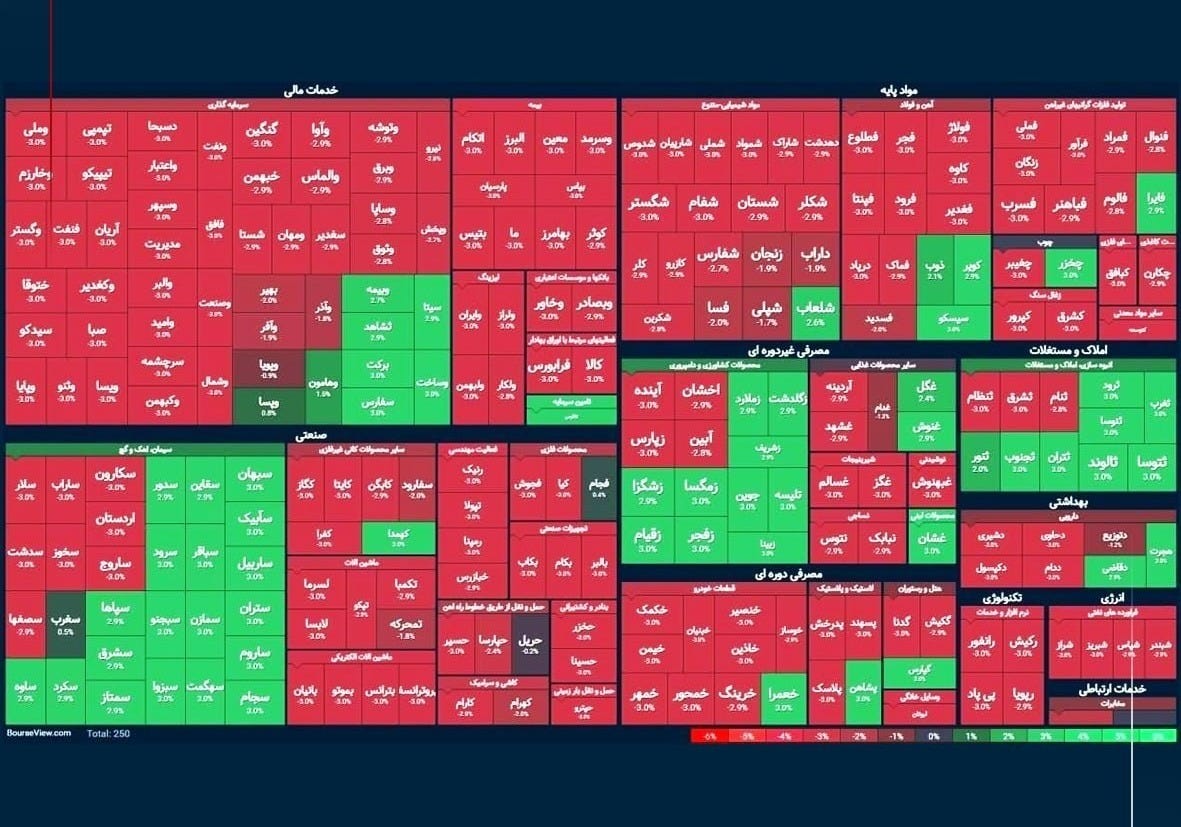
The Iranian stock market opening for the first time since February. (Tasnim News)
It’s Tuesday, May 19, and for the past few days, the skies above Jerusalem have been echoing with the sound of fighter jets. The Air Force is on high alert, preparing for potential action as diplomatic avenues with Tehran close. According to Reuters, Iran’s latest counterproposal is a nonstarter that simply mirrors previously rejected terms. Sources speaking to Axios confirmed that Tehran still refuses to halt uranium enrichment or surrender its stockpile, leading the Trump administration to officially dismiss the offer as “insufficient.”
This impasse was echoed by IRGC-affiliated media, which noted deep-seated disagreements and affirmed that Iran will not trade nuclear concessions to end the conflict. Meanwhile, the United States stands firm on its baseline requirements: Iran must hand over its HEU, dismantle its nuclear infrastructure and accept a 20-year freeze on uranium enrichment.
Also yesterday, Donald Trump revealed he had called off a military strike against Iran that was slated for the following day. According to Trump, the pause was requested by Qatari Emir Sheikh Tamim bin Hamad Al Thani, Saudi Crown Prince Mohammed bin Salman, and Emirati President Mohamed bin Zayed, who urged a two-to-three-day suspension to allow ongoing negotiations to play out. Sources familiar with the matter told Axios that these Gulf leaders warned Washington they would “pay the price” if the U.S. proceeded, expressing deep concerns that Iran would retaliate by targeting their vital energy and oil infrastructure. Though I would take this claim with a grain of salt, the report may have been an attempt to confuse or threaten Iran, or perhaps artificially disassociate the Gulf countries from retaliation.
While Trump noted that the regional leaders remain optimistic about securing a mutually acceptable deal to block Iran’s nuclear ambitions, he emphasized that the U.S. military remains primed for a “full, large-scale assault” on short notice if talks collapse.
Meanwhile, Tehran is moving to institutionalize unilateral control over the Strait of Hormuz. Iran’s newly formed Persian Gulf Strait Authority recently declared itself the sole legal manager of the waterway, warning that unauthorized transit is illegal and leaving 1,500 vessels backed up awaiting permission. IRGC-affiliated media are now targeting critical global digital infrastructure. Outlets now suggest that Iran’s “absolute sovereignty” allows it to impose fees and oversight on the major subsea fiber-optic cables running through the strait—including the networks connecting Asia, Europe and the Gulf. Crucially, state media warned that “deliberate actions” resulting in simultaneous damage to these cables could be used to inflict massive financial and communications disruptions worldwide.
Right before the last operation began, I actually bought a custom T-shirt that read: “I don’t know when the Iran strike will be.” It was the only way to preempt the endless barrage of questions I faced every time I walked out the door. Today, I find myself able to reuse what I thought would be a single-use shirt. I don’t know the precise timeline, but just like last time—it is coming.
Finance Minister Bezalel Smotrich holds a press conference ahead of the vote on the state budget at the Knesset, the Israeli parliament in Jerusalem, 2026. (Yonatan Sindel/Flash90)
In a note to journalists on Sunday, the International Criminal Court spokesperson firmly pushed back against rumors of impending indictments, stating that the court “denies the issuance of new arrest warrants in the situation in the State of Palestine.” Two days later, a request was officially lodged for the arrest of Israeli Finance Minister Bezalel Smotrich. Hearings have reportedly examined the possibility of filing requests against National Security Minister Itamar Ben-Gvir and other senior officials, though no formal submissions have been made in their cases thus far.
You may be surprised the national security minister has been exempt. After all, if extremist Israeli rhetoric were a band, Ben-Gvir is the Simon, and Smotrich the Garfunkel. The difference is that when it comes to making substantial changes on the ground, it is Bezalel Garfunkel who has all the talent for expanding settlements, while Simon is busy yelling pseudo-genocidal obscenities into a microphone and popping bottles of champagne to celebrate.
Reports indicate that the request against Smotrich was actually submitted at the beginning of April, citing suspicions of “war crimes, crimes against humanity, and the crime of apartheid” in Judea and Samaria. If approved, it would mark the first time an international court has ever issued a warrant specifically for the crime of apartheid.
This groundbreaking legal work is being spearheaded by the venerable ICC chief prosecutor, Karim Khan. This is the same Khan who was assured he would be “looked after” by Qatar if he successfully filed warrants against Israeli leaders. The same Khan who recently faced allegations of serious sexual misconduct—which he and publications like The Mail suggested were a smear campaign concocted by the Mossad. You have to hand it to the Mossad—they are good at their jobs. But exactly how Israeli intelligence managed to take control of Khan’s hands is a detail they have yet to explain.
But let us shift focus to those who have not received arrest warrants. The Middle East is hardly suffering a shortage of war criminals. Yet, the ICC has conspicuously spared members of the Syrian regime who massacred their own citizens less than a year ago, leaders of the Taliban who systematically abuse women’s rights, and the various armed factions in Yemen that routinely brutalize civilians.
Defenders of the ICC often argue that the court cannot prosecute these other regimes because they are not parties to the Rome Statute, placing them outside its jurisdiction. But there is a glaring double standard in this logic: Israel isn’t a member either. All of the above-mentioned nations are signatories to the treaty that are yet to complete its ratification, the ICC is prosecuting Israel through a legal fiction—treating Palestine as a sovereign state, despite it lacking the legal and functional qualifications of statehood. Let’s be honest: if the court genuinely wanted to hold those other countries accountable, they would find the jurisdictional gymnastics to make it happen.
It appears that not only is there ‘no news without Jews,’ but if it’s not a Jewish crime, the court simply has no time.
Attorney General Gali Baharav-Miara at a Constitution, Law and Justice Committee meeting at the Knesset. (Oren Ben Hakoon/Flash90)
In the U.S., Todd Blanche, John Sauer, and David Warrington serve as the deputy attorney general (head of state prosecution), the solicitor general (the government’s defense attorney), and the White House counsel (adviser to the government), respectively. Their Israeli equivalent is Gali Baharav-Miara. Despite the three distinct names, that is in fact a single person. One woman shoulders the immense responsibility to advise the government, lead prosecutions, and defend the state in court. I doubt many Americans could name Sauer or Warrington; quite a few know Blanche, but every single Israeli knows Baharav-Miara.
After all Baharav-Miara is the lone watcher on the wall, fighting every coalition appointment, law and action tooth and nail to protect either Israeli democracy or the deep state—depending on who you ask. She is unique among global judicial officials in that she serves as the unofficial leader of the opposition; at anti-government protests, it is her face, not Yair Lapid’s, being brandished by the crowds. Most relevant to today, she is also the primary target of a law currently racing through the legislature. Expedited by fears of a potential coalition collapse, the legislation is designed to split her role into the three separate positions mentioned above.
These three roles are like judge, jury and executioner: vital to a functioning democracy when kept apart, but wildly dysfunctional when combined. For a case study, let us look at the ongoing legal battle challenging the appointment of Roman Gofman to head the Mossad.
The entire case against Gofman rested on a single claim: that he had lied to an IDF military intelligence officer—referred to as Brig. Gen. “Gimmel”—during the 2022 investigation into the Ori Elmakayes affair. In that incident, Gofman’s IDF division allegedly authorized Elmakayes, a 17-year-old blogger, to post classified information as part of an Arabic-language influence campaign. Unaware of this secret arrangement, the Shin Bet arrested the teenager, who was subsequently indicted for espionage and detained for 18 months before the charges were finally dropped. Attorney General Gali Baharav-Miara leaned heavily on this debacle, arguing that Gofman’s alleged abandonment of an asset proved he lacked the integrity required to lead the nation’s premier spy agency.
However, that narrative completely collapsed when the High Court ordered Brig. Gen. Gimmel to submit a sworn affidavit detailing exactly what was said during that 2022 interrogation. Gimmel explicitly testified under oath that he had never even asked Gofman about Elmakayes, noting that neither of them even knew the teenager’s identity at the time. Instead, Gimmel explained that he had only asked Gofman if classified documents had been leaked from his division—a claim Gofman denied, insisting they only utilized open-source materials. Because Gofman was never actually questioned about the teenager, it was factually impossible for him to have lied about the matter.
In her capacity as the government’s legal adviser, Baharav-Miara advised against the appointment. Fair enough—that is her prerogative. But she then refused to represent her primary client, the government, because they didn’t take her advice, forcing Prime Minister Netanyahu to hire private counsel to defend his executive decision. To top it all off, she isn’t just refusing to defend the state; as the head of the prosecution, she is effectively prosecuting the case against it. Now that the appointment appears poised to go through regardless, Baharav-Miara has once again earned the unique distinction of being a defense attorney constantly defeated by her own client.
Imagine a theoretical, post-reform world where these roles are split among three separate people—let’s call them Gali, Baharav and Miara. If Gali, the adviser, counsels against the government’s move, very well. The government will still have Baharav, the public defender, to represent them in court. And if Miara, the prosecutor, decides to bring a case, very well. Crucially, even if one of these three roles is occupied by an avowed and determined opponent of the government, the separation ensures the state’s other legal functions can still be fulfilled. At the very least, the government is no longer being advised, abandoned and prosecuted by the exact same person.
The office of the attorney general is one of the most vital institutions in any democracy, tasked with the immense responsibility of safeguarding justice and the rule of law. Aristotle famously observed that “the rule of law is better than that of any individual.” It is profoundly ironic, then, that a system designed to prevent the concentration of arbitrary power places all aspects of the application of the law into the hands of a single, unelected official.
English Editor: Ari Tatarka
If you enjoy the newsletter, you can show your support by becoming a paid subscriber—it really helps keep this going. I’m also offering a special monthly briefing for a small group of premium members. I’d love to have you join us—just click below to find out more.
Thanks for reading It’s Noon in Israel! Subscribe for free to receive new posts and support my work.


What would be the negative consequences for president Herzog to give clemency / dismiss the charges as Trump promoted previously?
Having the prime Minister on trial for years over a gift box of cigars epitomizes maoist Marxist trinitarian tribunal toxicity yet the great nation of Israel is stained with that supreme Court which if I understand correctly didn't enable full retaliatory powers of the IDF until the evening of the 7th 🙄😖🤔
These days anything one disagrees with is a "threat to our democracy"
But 19 years ago, long before the controversy about judicial reform, one of America's top constitutional scholars, Judge Richard Posner, took Israel's all-powerful judiciary to task. His essay is well worth reading again today
https://newrepublic.com/article/60919/enlightened-despot