
It’s Tuesday, October 6, and last night I went up against Mehdi Hasan on “Piers Morgan Uncensored.” You can judge for yourselves who landed the punches.
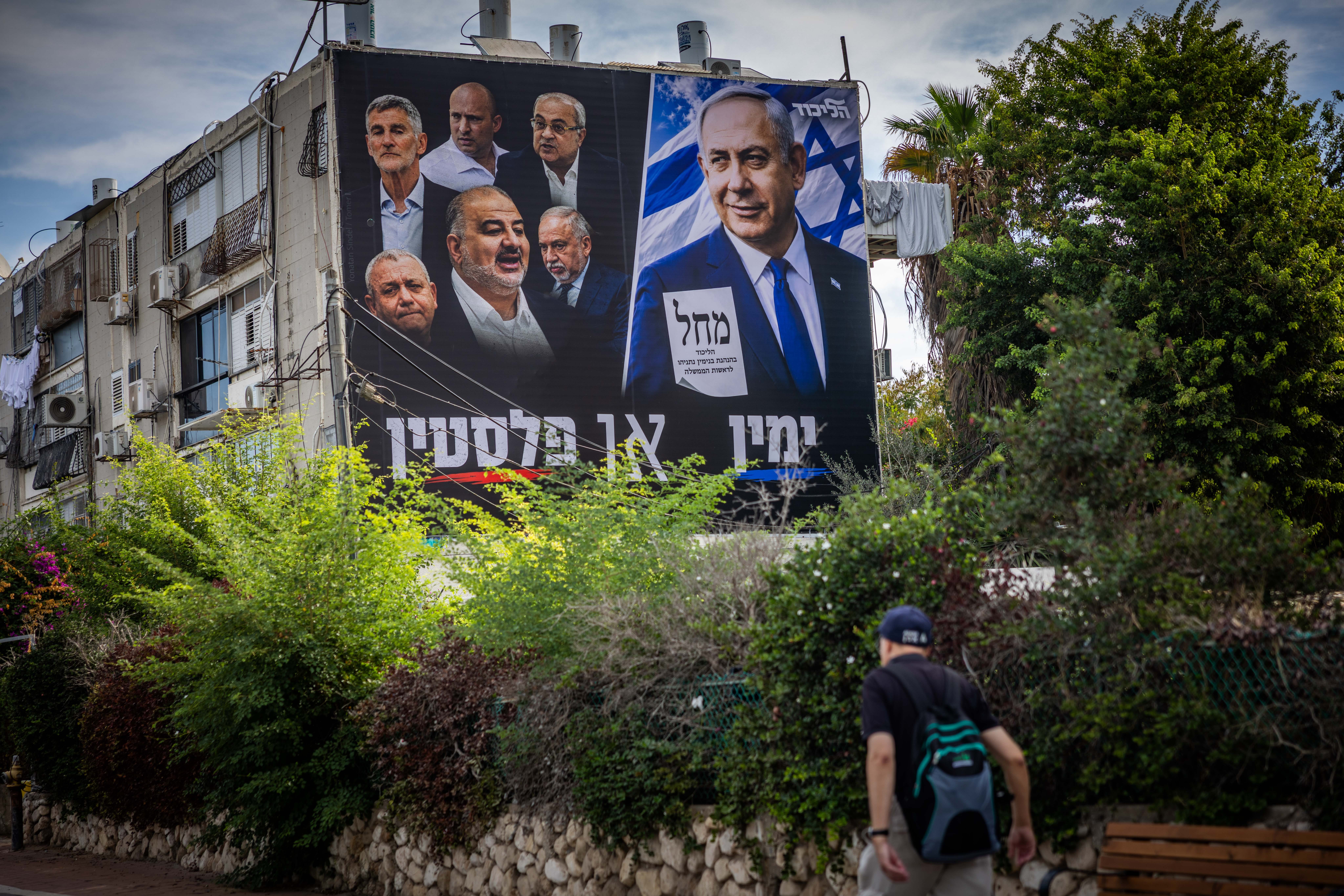
People walk past a giant election campaign poster displayed on a building in the southern Israeli city of Ashdod, showing Benjamin Netanyahu alongside leaders of opposition parties, with the slogan “Right or Palestine,” ahead of Israel’s upcoming general elections, October 5, 2026. (Yonatan Sindel/Flash90)
In recent weeks, Benjamin Netanyahu has faced a dilemma: Which channel does he believe? Channel 12, which has the opposition at 54 and Netanyahu’s bloc at 53, or Channel 14, which has him significantly stronger at 63, while the opposition hovers at 45?
It seems Bibi is putting his money on 14.
At this point in the cycle, with Channel 12 numbers like these, we would expect to see Bibi laying the groundwork for a last-minute “gevalt” campaign, the panic pitch that the right is about to lose. It’s entirely possible that voters will check thier texts to find out on October 25 that Arabs are going to the polls “in droves,” as Netanyahu warned in 2015, but for now Bibi is battening down the hatches and waiting for the storm to blow over.
This past Sunday, Yashar chairman Gadi Eisenkot invited Netanyahu to debate, only to be met with silence from Netanyahu and mockery from his campaign. The move revealed something about the opposition: Despite their nonaggression treaty, Eisenkot is still trying to assert himself as leader of the opposition bloc. It also revealed something about Netanyahu: He’s confident. If you’re way behind, you go for the debate, especially when you’re famous for your rhetorical skill while your opponent is infamously a man of few words. But if you’re confident, why risk making mistakes?
But there is a better indicator: Netanyahu’s current campaign against rogue right-wing candidate Ofer Winter. After failing to nudge him into a stable partnership with a member of his coalition, Bibi is now trying to minimize wasted votes by crushing the ex-general. He wouldn’t be so quick to destroy Winter’s party if he thought he would be dependent on every possible right-wing seat. As it stands, Bibi is confident that come October 28 he won’t need them.
Whether he’s right, I can’t say. What I can state as fact is this: Likud heads into the final three weeks of the campaign believing it is heading to victory, on the verge of an outright majority. Given nearly every poll published this term, that sounds bizarre. But that’s their starting point.
On top of that, there’s a morale boost, courtesy of Sunday’s election in Brazil. Flavio Bolsonaro, son of one of Netanyahu’s closest friends, former Brazilian President Jair Bolsonaro, was a right-winger trailing the left’s candidate by 2-3 points in the polls. He won by 2-3 points, finishing roughly 7 percent ahead of where the polls had him.
In Likud, they’re hoping to be dancing at a Carnival of their own soon.
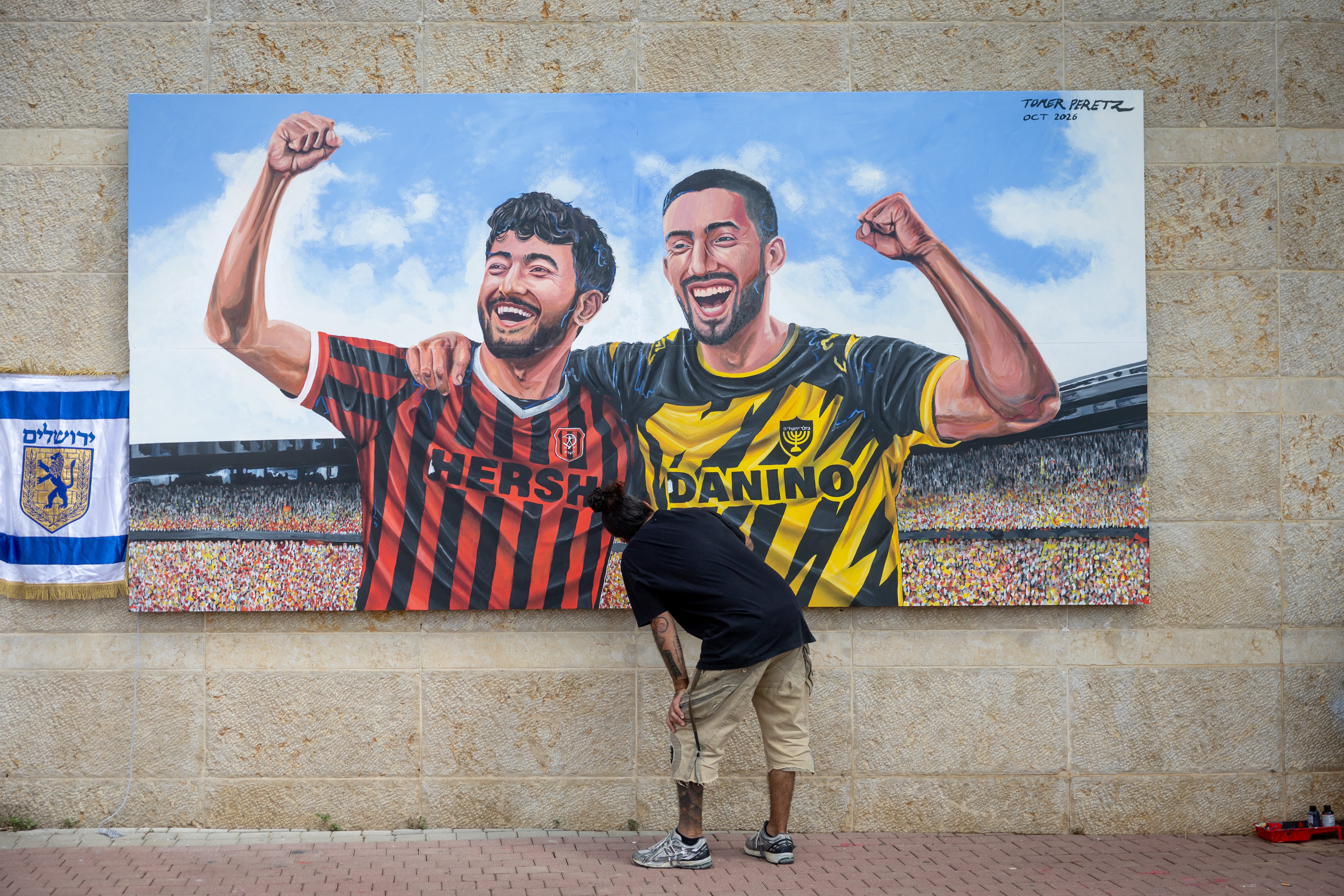
A mural depicting Hersh Goldberg-Polin, a Hapoel Jerusalem fan, and Ori Danino, a Beitar Jerusalem fan, painted by artist Tomer Peretz in Jerusalem. Goldberg-Polin and Danino were kidnapped during the October 7, 2023 Hamas attack, held captive in Gaza for 328 days, and killed together in a tunnel in Rafah, October 5, 2026. (Chaim Goldberg/FLASH90)
On October 20, a new basketball team will tip off in Israel’s fourth division. Hapoel “HaShisha” Jerusalem (“the six”) is named for Hersh Goldberg-Polin, Eden Yerushalmi, Ori Danino, Alex Lobanov, Almog Sarusi and Carmel Gat, the hostages who survived nearly 11 months in Hamas captivity only to be murdered in a Rafah tunnel in late August 2024, days before IDF troops reached them.
Hersh was a rabid Hapoel fan of both its basketball and soccer teams. During his captivity, the crowd at one senior game roared “Bring Hersh home” to his sisters in the stands. There has hardly been a Hapoel game since without Hersh’s face somewhere in the crowd. Hersh’s mother, Rachel Goldberg-Polin, told the founders of the new team, Nadav Hess and Amitai Woltman, that she wanted Hersh remembered through community and action, not a building with his name on it.
The families heard about the new team on their shared WhatsApp group. Einav Danino, Ori’s mother, made the point that matters: Memorial days come and go, but this runs all year. She plans to be at the opener. Alex’s widow, Michal Lobanov, says her young sons are bursting with pride that their father has a basketball team. Yigal Sarusi, Almog’s father, noted that Almog was a Maccabi Netanya soccer man, but the family will now be paying closer attention to basketball.
The team will play at the Mount Scopus hall, chosen partly for its electronic scoreboard. At every game, the six will appear on it, along with the other victims of October 7 and the war.
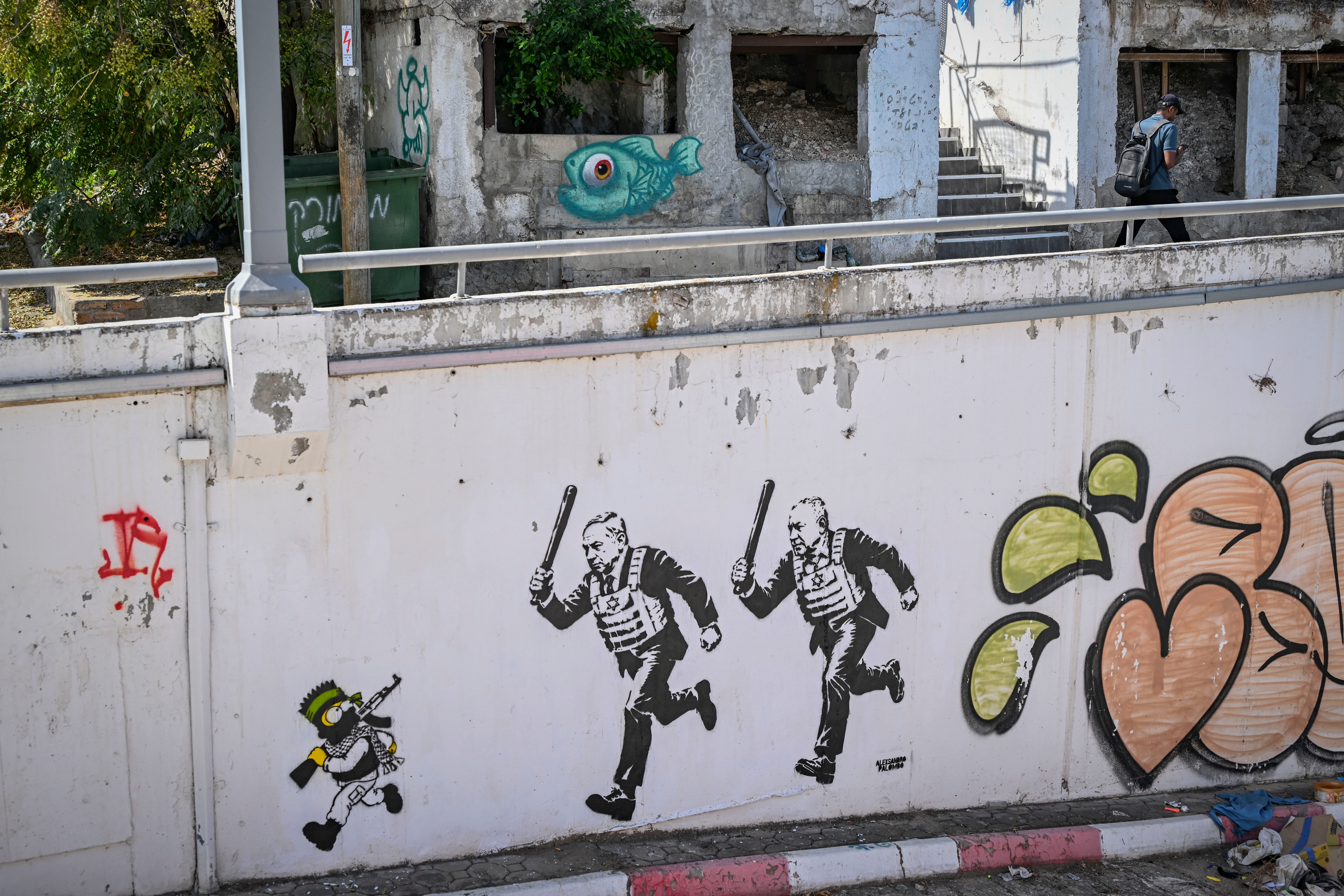
A mural titled “RUN” by artist aleXsandro Palombo, depicting Israeli Prime Minister Benjamin Netanyahu and Gadi Eisenkot wearing bulletproof vests and carrying batons as they chase Bart Simpson, portrayed as a young Hamas terrorist, is seen in Tel Aviv, September 29, 2026. (Avshalom Sassoni/Flash90)
Deep down, everyone knows it. The only stable government that could plausibly form, by most polls, is a unity government with rotation. True, Netanyahu and former Defense Minister Benny Gantz’s last one collapsed loudly after just eight months. But one could argue the last two rotation governments—Gantz-Netanyahu and Naftali Bennett-Yair Lapid—collapsed because they weren’t truly equal: one side was a very large bloc and the other small, and the government buckled under that imbalance. If the polls hold and the two blocs end up light-years from an absolute majority, an equal government made up of both blocs—minus the Haredim and the Arabs, minus Democrats leader Yair Golan and National Security Minister Itamar Ben Gvir—may be the way out of an endless string of elections with no end in sight.
The public is less impressed—perhaps that’s only natural in an election period, which tends to sharpen positions rather than convene reconciliation councils. And yet: only 17 percent support a Netanyahu-Eisenkot rotation, against 64 percent strongly opposed. In the coalition, support is a little higher (24 percent versus 45 percent), and in the opposition, lower still (16 percent to 77 percent). The most opposed, naturally, are Arab voters: only 9 percent in favor against 70 percent opposed. They understand that in a national reconciliation of this kind, they’re cast as the sacrificial lamb.
English Editor: Ari Tatarka
If you enjoy the newsletter, you can show your support by becoming a paid subscriber—it really helps keep this going. I’m also offering a special monthly briefing for a small group of premium members. I’d love to have you join us—just click below to find out more.
Thanks for reading It’s Noon in Israel! Subscribe for free to receive new posts and support my work.


It deeply and always saddens me that, rather than allowing a dialogue, such a host stokes fire rather than reasoned discourse. But this is our world.
I commend you, Amit, for going into such a battle and standing upright as you do. I am just sorry that this is what you must do to meet false narratives. Thank you for all that you do, each and every day. For all of us. You are a blessing and I for one am deeply grateful.
Hi Amit, as someone who has followed your newsletter for a while now, I wonder if perhaps you could explain why in fact international journalists have not been allowed to enter Gaza. It did not seem to me that this question was properly answered in that short clip. I take it that you don’t tend to answer many of the comments here, from what I’ve seen, so if nothing else I hope this comment will stimulate conversation with others.
Another thing: I hope in the future you will refrain from including anymore such clips from Piers’s show. It’s not good for my blood pressure.