Stolen Election or Racist Setup?
Also, Israeli research receives global recognition and a soccer team ends three years in exile.
View of the Hebrew University in Givat Ram, Jerusalem, on April 7, 2025. (Oren Ben Hakoon/Flash90)
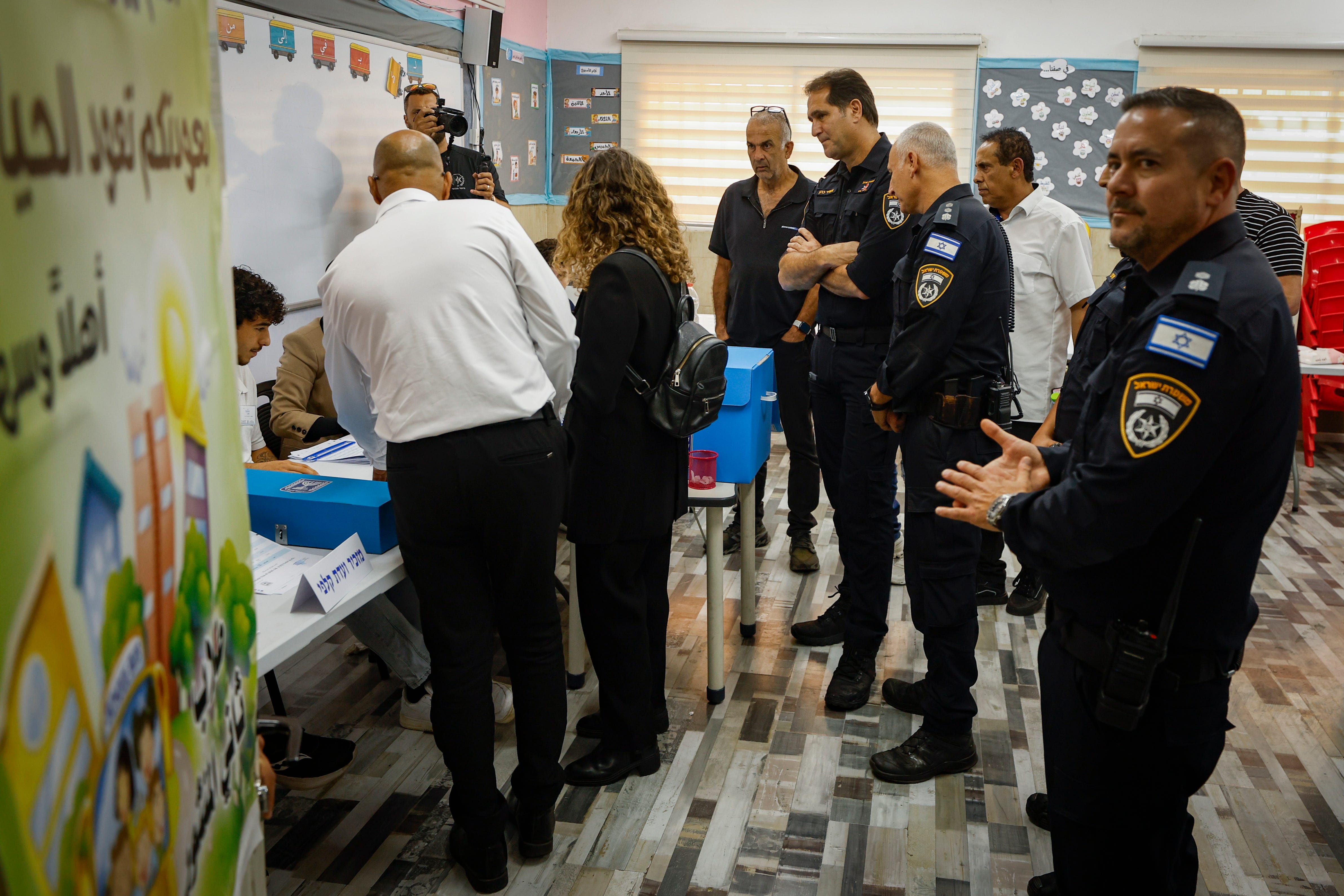
It’s Tuesday, November 17, and hours before polls opened on election day, police arrested three activists from the Islamist Ra’am party and searched their homes without a warrant. Police later said the three were suspected of election bribery and had been found with envelopes holding 12,000 shekels in cash in total. Benjamin Netanyahu is claiming mass fraud; the opposition is claiming a setup.
The story, boosted by unprecedented Arab turnout, dominated election day.
Never one to miss an opportunity to catastrophize, Netanyahu announced that suspects were arrested “in possession of envelopes containing cash, along with ballots for [Ra’am party leader] Mansour Abbas.” He called for a formal investigation and warned that Arab parties were trying to steal the election.
What his and the police’s statements failed to mention was that the information behind the arrests came from the Prime Minister’s Office. According to reports by Channel 12 and i24, the tip came from Ido Nordau, the acting chief of staff in the Prime Minister’s Office, who called Police Commissioner Danny Levy and connected him to a source who said he would “expose a process of improper influence on the election.”
Naturally, a tip that originates in the Prime Minister’s Office that is likely to boost Likud turnout won’t strike anyone as a coincidence. Mansour Abbas called the arrests “an attempt to influence the election results,” and Gadi Eisenkot’s Yashar party accused Netanyahu of “laying the groundwork to challenge the results.” Likud has done little to dispel the suspicion, citing the arrests in its claim that the election was stolen and pressing for revotes at Arab polling stations.
The evidence so far doesn’t support either allegation.
Netanyahu has run a team focused on voter fraud in Arab communities before every election since 2019, and not without grounds. The activists told investigators the money was meant to help needy people, but Arab elections are rife with patronage and intimidation. As Maariv’s Kalman Liebskind wrote, “there are no truly clean elections, and there never have been,” with attempts at fraud “from north to south, in city and village.”
Not to mention, the arrests themselves were ordered by Boaz Blat, head of the Investigations and Intelligence Division, no favorite of the coalition. The courts, similarly unfriendly, did not dismiss them out of hand. The Magistrate’s Court only released one suspect to house arrest, finding the evidentiary basis insufficient, while the District Court accepted the police appeal. Days later, police arrested four more suspects, including three school principals from Bedouin communities in southern Israel, bringing the total detained in the probe to seven.
That’s not to say this was a spotless case of law enforcement. Warrantless raids on election day do not put Israel in distinguished democratic company. Some inside the force reportedly believe officers should have waited to catch the activity in progress. Omitting the source of the tip was worse. As Maariv put it, the omission allowed political use of the case and inflated it, even though the matter is local and involves 12,000 shekels.
Nor is the picture helped by Attorney General Gali Baharav-Miara’s sudden discovery of objectivity. After insisting on overseeing the investigation into her friend, the former military advocate general, she has reportedly halted the deputy commissioner’s review of how police handled the tip, citing a conflict of interest.
The investigation continues. Whatever it finds, one hopes everyone involved will meet it with more objectivity than they’ve managed so far.
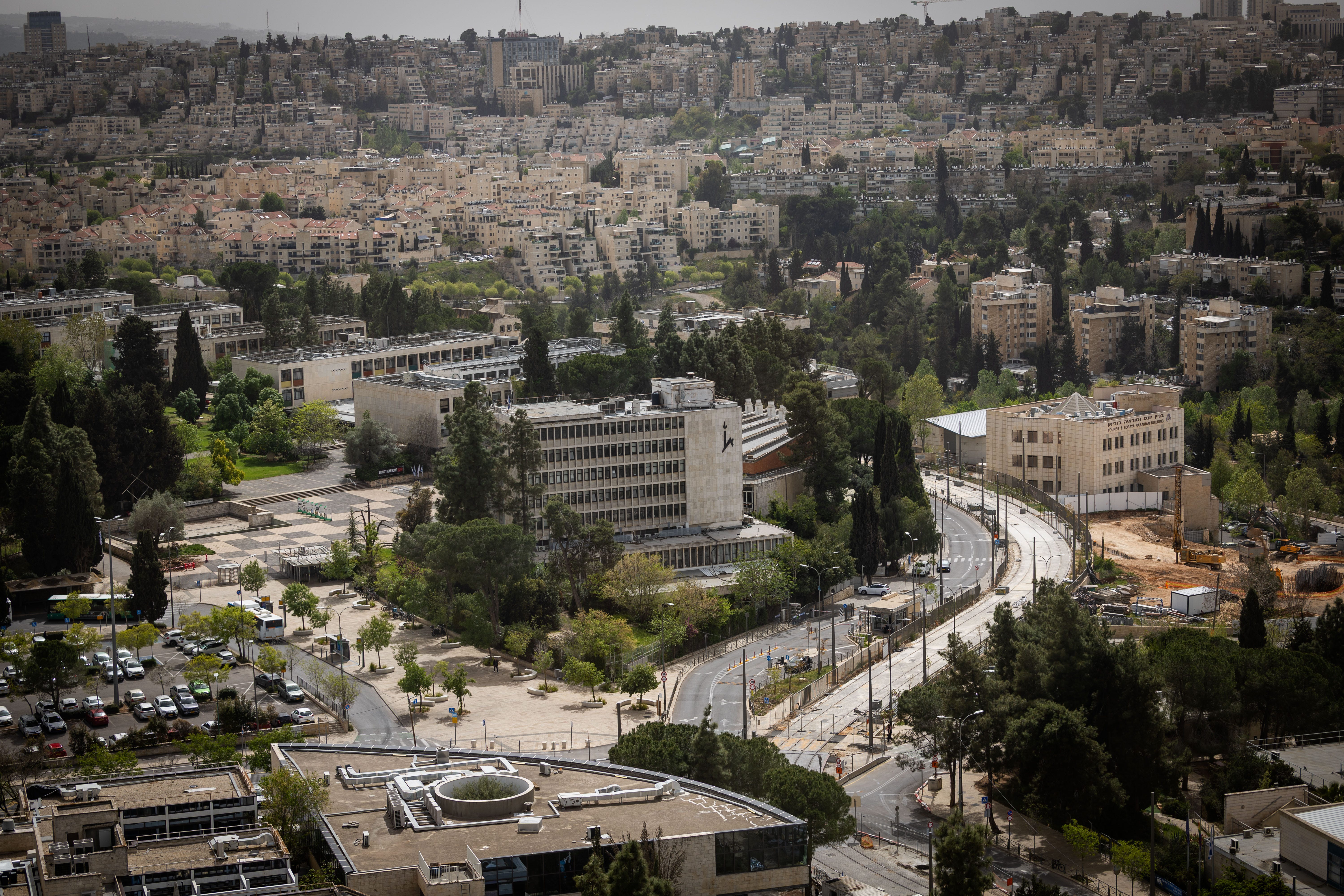
View of the Hebrew University in Givat Ram, Jerusalem, on April 7, 2025. (Oren Ben Hakoon/Flash90)
The Hebrew University of Jerusalem has 233 researchers on the 2026 Stanford–Elsevier list of the world’s most-cited scientists. The list, published in October, scores researchers across 22 fields and 174 subfields on a composite index that weighs citations, co-authorship and authorship position, and it selects the top 2 percent in each.
To put the number in perspective: the list is drawn from a pool of more than 6 million scientists worldwide, and last year’s edition included more than 236,000 researchers. A single university in a country of 10 million placing 233 names on it is a significant showing.
Three of the university’s names sit near the very top. Robert Aumann, who shared the 2005 Nobel Prize in economics for his work on game theory, ranks fourth in economics. David Weisburd of the Institute of Criminology ranks seventh in criminology. And Amos Tversky ranks fourth in experimental psychology.
You may recognize Tversky as the researcher who, with Daniel Kahneman, laid the foundations of behavioral economics. That work won Kahneman the Nobel in 2002, six years after Tversky’s death. Three decades after his passing, the world is still citing him.
The rest of the 233 are spread across psychology, astrophysics, microbiology, chemistry, physics and atmospheric science.
The news comes at a difficult time for Israeli researchers. According to VERA, the association of Israeli university heads, Israeli universities reported a 66 percent rise in complaints about foreign academic boycotts between October 2025 and April 2026. Ben-Gurion University president Daniel Chamovitz called the boycott campaign a long-term threat to “the core of Israeli research.” Belgium, the Netherlands and Britain top the list of countries where boycotts were reported.
Boycotts cut Israeli researchers out of joint grants, shared papers and international conferences. Many of the 233 names on this year’s list built their careers over decades of open collaboration.
Will the next generation of Israeli scientists get the same access?

The Israeli Premier League match between Beitar Jerusalem and Ironi Kiryat Shmona at Teddy Stadium in Jerusalem, October 31, 2026. (Danny Maron/Flash90)
On Monday morning, Kiryat Shmona’s city soccer team walked onto its home pitch for a training session. It may sound unremarkable, but after three years away from home it was anything but.
Coach Shai Barda’s last home match was on October 5, 2023. Two days later, Hamas invaded the south. The next day, Hezbollah opened a second front in the north, and by the end of the month virtually all of the city’s 25,000 residents had been evacuated. Since then, apart from a brief return last year, the team has played its “home” games in Netanya, about 150 kilometers south.
“There’s no place like home,” said winger Ariel Sharetzki. Barda went further and called it “a kind of victory over those who wish us harm. A victory for us and for the state.”
Goalkeeper Daniel Tannenbaum was more practical. The trip to Netanya, he said, takes an hour and a half to two hours each way, so not everyone can come. “The whole city wants to come back here.”
The whole city may want to come back, but much of it hasn’t. The official evacuation is long over and the state stopped paying evacuees, yet about 40 percent of residents never returned. When home games resume—in about two months—the players will be cheered by roughly half the crowd that saw them off three years ago.
The team has come back home. One hopes the fans will soon follow.
English Editor: Ari Tatarka
If you enjoy the newsletter, you can show your support by becoming a paid subscriber—it really helps keep this going. I’m also offering a special monthly briefing for a small group of premium members. I’d love to have you join us—just click below to find out more.
Thanks for reading It’s Noon in Israel! Subscribe for free to receive new posts and support my work.


If Israel does not tackle the issue of voter fraud in a serious manner, it will become institutionalized. Pockets of it will persist and in those areas become an accepted practice. Then, the party that benefits most from such fraud will resist any and all attempts to stop it. I often hear that as long as it doesn't change the outcome, a little fraud here and there isn't a big deal. But no one really knows if it doesn't influence outcomes, and hopefully just on principle alone it should be considered a scourge on any democracy. Stay focussed and don't get bogged down with ancillary concerns, however partisan they may be.
Who cares where the ‘tip’ regarding the fraud came from. As long as there is evidence which backs up the information that should be what matters. And it seems thus far that it does, at the very least to justify a more thorough investigation.